
Continental Airlines, the laggard among major domestic airlines in deciding whether to install Internet Wi-Fi connectivity, said today that it chose Aircell's widely-used Gogo system. Starting in the second quarter of next year, Continental said it will offer Gogo service on its fleet of 21 Boeing 757-300 aircraft that primarily serve domestic routes.
The Gogo system runs off land-based towers and doesn't work on overseas flights. Competing systems like the one offered by Aircell's much-smaller competitor Row44 work off satellites, and thus can be used over oceans. Oddly, Row44's major domestic customer so far is mostly landlocked Southwest Airlines, which plans to roll out the system on its fleet of 737s. (Row44 claims it has superior connectivity and reliability; Gogo disputes that).
More than 600 aircraft flown by domestic airlines are now wired with Gogo. Delta Air Lines has been the leader, but American Airlines hasn't been far behind. AirTran and Virgin America now have their entire fleets wired. United, US Airways and Alaska Airlines and Air Canada are either slowly rolling out Gogo or plan to do so soon.
The costs for a connection vary, and many promotions are under way. Gogo service can cost up to $12.95 on some long-haul domestic flights, but the price is lower for shorter flights and for those using hand-held Wi-Fi devices, rather than laptops.
Continental said that it plans to offer the service from "$4.95 and up, based on length of flight." It didn't specify what "up" means. I'll get back to you on that.
Nor did Continental say whether the Gogo system will be rolled out to the rest of its mainline domestic fleet, or when.
Aircell has told me that it costs about $100,000 per plane to install the Gogo equipment. However, it is not clear how much of that cost has been paid by individual airlines, or whether some of the installation costs have been paid by Aircell itself -- a company financed by venture capital betting heavily on the not-sure-bet proposition that enough people will pay for the service to make it profitable.
To date, the "take rate," which is the term for the percentage of passengers who opt to pay, has been in the 5-7 percent range on average on most flights, I am told. That is below break-even levels, but supporters of in-flight Wi-Fi firmly believe that there is a growing market, driven mostly by the sharp increase in the number of hand-held wireless Wi-Fi devices being carried by fliers -- that will soon be solid enough to build a profitable industry for in-flight connectivity and for promotion of ancillary products such as in-flight marketing, including retail sales.
###
Wednesday, December 16, 2009


British Airways, Union in Talks to Avert Christmas Strike
British Airways and the union for its more than 13,000 flight attendants are negotiating today in an attempt to revolve issues that led to an overwhelming vote for a 12-day strike scheduled to start Dec. 22.
Here's an update from the Guardian newspaper.
###
Here's an update from the Guardian newspaper.
###
Tuesday, December 15, 2009
Delta, Predicting $1.1B Loss for '09, Sees Recent Uptick in Business Travel Demand, Talks of Need For More Industry 'Consolidation'
Delta Air Lines today said it expected to lose $1.1 billion for this year, partly because of bad bets on fuel hedges earlier in the year.
Executives at Delta, which is now the world's largest airline, told an investors conference today that trends are improving. For example, the "volume" of tickets sold to corporate clients rose 15 percent in recent weeks, Delta said, according to this Reuters report. (That does not mean that revenue from those tickets rose similarly, however.)
And again, we're hearing the "consolidation" mantra, and this from the airline that swallowed Northwest. Consolidation will be the airline story of 2010.
Delta's CEO, Richard Anderson said "over time, more consolidation will help this business model evolve to a return on capital."
It will also raise fares and reduce choices, of course.
###
Executives at Delta, which is now the world's largest airline, told an investors conference today that trends are improving. For example, the "volume" of tickets sold to corporate clients rose 15 percent in recent weeks, Delta said, according to this Reuters report. (That does not mean that revenue from those tickets rose similarly, however.)
And again, we're hearing the "consolidation" mantra, and this from the airline that swallowed Northwest. Consolidation will be the airline story of 2010.
Delta's CEO, Richard Anderson said "over time, more consolidation will help this business model evolve to a return on capital."
It will also raise fares and reduce choices, of course.
###
British Airways Trying to Head Off Christmas Strike
British Airways is in court today in what it calls "an attempt to protect
customers from the massive stress and disruption threatened by Unite’s
decision to call a 12-day strike from December 22." Unite is the union representing more than 13,000 flight attendants and other employees.
BA is seeking an injunction to block the strike, set for Dec. 22. The airline is challenging the strike vote, claiming "irregularities" in balloting.
"As a backup to the legal action, British Airways managers have been
establishing which cabin crew might wish to work normally during the strike
period," a statement by the airline said.
A strike would cost BA about $49 million a day.
Here's an update on the situation from the Times of London today.
###
customers from the massive stress and disruption threatened by Unite’s
decision to call a 12-day strike from December 22." Unite is the union representing more than 13,000 flight attendants and other employees.
BA is seeking an injunction to block the strike, set for Dec. 22. The airline is challenging the strike vote, claiming "irregularities" in balloting.
"As a backup to the legal action, British Airways managers have been
establishing which cabin crew might wish to work normally during the strike
period," a statement by the airline said.
A strike would cost BA about $49 million a day.
Here's an update on the situation from the Times of London today.
###
With Another Bad Financial Year Ahead, World Airlines Look to More Consolidation
The indicators are clearing up for next year it's apparent now that world airlines are going to lose more money in 2010 than had been anticipated.
The International Air Transport Association today said world airlines are likely to lose about $5.6 billion in 2010, a figure considerably higher that the previous early forecast of $3.8 billion. IATA maintains its forecast of a $11 billion loss for 2009.
“We are ending an annus horribilis that brings to a close the 10 challenging years of an aviation decennis horribilis. Between 2000 and 2009, airlines lost $49.1 billion," said Giovanni Bisignani, IATA’s director general, tossing around both the Latin and the numerus horribilis.
“The worst is likely behind us," he said. Demand is improving and airlines are cutting non-fuel costs, he said.
On the other hand, I would note, airline employees are pushing back on cost-cuts, as demonstrated by the looming Christmas holiday strike by flight attendants at British Airways, which stands to take a financial clobbering not factored into current forecasts.
Plus, oil prices are edging up again, though airline cost-cutting is mitigating the full impact. IATA is forecasting an average price of $75 a barrel next year, up from the average of about $62 that is expected for this year. And the Air Transport Association in the U.S. is sounding a warning about speculation in the oil market.
Meanwhile, airlines are still unable to boost prices to offset costs. While a total of 2.28 billion passengers are expected to fly in 2010, bringing demand back in line with the peak recorded in 2007, though with $30 billion less in revenue, as fares continue to remain low by comparison with 2007. Passenger revenue, which fell 12% this year, is not expected to grow much next year, when previous aircraft orders will add 2.8 percent to total capacity.
"On top of this, corporate travel buyers have adjusted their budgets to reflect lower premium fare levels," IATA said.
The days of those $11,000 business class fares between New York and London are over.
"Tough times continue," said Bisignani.
And as I have been saying all year, something's gotta give.
"The industry is structurally out of balance," Bisignani said. He called it "hyper fragmentyed."
And that is another indication that the industry intends to consolidate further, mostly through the kinds of route and alliance collaborations that are really quasi-mergers.
“Consolidation is the great hope for the industry. The round of consolidation experienced since this horrible decade began is a step in the right direction. But it has been confined within political borders as a result of ownership restrictions in the archaic bilateral system. The industry cannot afford the mounting losses of the status quo. The next decade must facilitate consolidation,” Bisignani said.
###
The International Air Transport Association today said world airlines are likely to lose about $5.6 billion in 2010, a figure considerably higher that the previous early forecast of $3.8 billion. IATA maintains its forecast of a $11 billion loss for 2009.
“We are ending an annus horribilis that brings to a close the 10 challenging years of an aviation decennis horribilis. Between 2000 and 2009, airlines lost $49.1 billion," said Giovanni Bisignani, IATA’s director general, tossing around both the Latin and the numerus horribilis.
“The worst is likely behind us," he said. Demand is improving and airlines are cutting non-fuel costs, he said.
On the other hand, I would note, airline employees are pushing back on cost-cuts, as demonstrated by the looming Christmas holiday strike by flight attendants at British Airways, which stands to take a financial clobbering not factored into current forecasts.
Plus, oil prices are edging up again, though airline cost-cutting is mitigating the full impact. IATA is forecasting an average price of $75 a barrel next year, up from the average of about $62 that is expected for this year. And the Air Transport Association in the U.S. is sounding a warning about speculation in the oil market.
Meanwhile, airlines are still unable to boost prices to offset costs. While a total of 2.28 billion passengers are expected to fly in 2010, bringing demand back in line with the peak recorded in 2007, though with $30 billion less in revenue, as fares continue to remain low by comparison with 2007. Passenger revenue, which fell 12% this year, is not expected to grow much next year, when previous aircraft orders will add 2.8 percent to total capacity.
"On top of this, corporate travel buyers have adjusted their budgets to reflect lower premium fare levels," IATA said.
The days of those $11,000 business class fares between New York and London are over.
"Tough times continue," said Bisignani.
And as I have been saying all year, something's gotta give.
"The industry is structurally out of balance," Bisignani said. He called it "hyper fragmentyed."
And that is another indication that the industry intends to consolidate further, mostly through the kinds of route and alliance collaborations that are really quasi-mergers.
“Consolidation is the great hope for the industry. The round of consolidation experienced since this horrible decade began is a step in the right direction. But it has been confined within political borders as a result of ownership restrictions in the archaic bilateral system. The industry cannot afford the mounting losses of the status quo. The next decade must facilitate consolidation,” Bisignani said.
###
Sunday, December 13, 2009
Christmas Strike Likely At British Airways [Updated]
British Airways flight attendants voted overwhelmingly to authorize a strike starting Dec. 22.
According to this account in tomorrow's Times of London, travel bookers are saying some customers making holiday plans are exhibiting the "Abba affect" -- that is, "Anything But British Airways.'
###
According to this account in tomorrow's Times of London, travel bookers are saying some customers making holiday plans are exhibiting the "Abba affect" -- that is, "Anything But British Airways.'
###
Friday, December 11, 2009
The Number of Americans With Passports Is Surging, There Are A380s With 840 Seats On the Way, and Other Travel Tidbits ...
I always look forward to the chatty eight-times-a-year trans-Atlantic travel reports by Donald N. Martin & Co., the travel promotion company. The current one, forwarded by Hans C. Friis-Jacobsen and Neil S. Martin, the managing partners of the firm, is as usual full of interesting factoids, comments and even detailed charts for us serious travel geeks.
I hope they don't mind me sharing the whole report.
Among the highlights:
--Overall trans-Atlantic traffic fell in November for the 13th consecutive month. But seat capacity was down an average 6.1 percent, twice the percentage of decline for passenger traffic.
--The number of Americans holding passports continues to rise, with a record one third of the U.S. population now having a passport. "Since 2003, the number of passport-holding Americans has surged by more than 35 million -- an extraordinary 60 percent -- to 94.5 million (not counting passport cards)," says the report. (This gives lie to the canard, frequently repeated in European media, that a shockingly small number of Americans hold passports.)
--Overall U.S. domestic capacity is down 6.9 percent for 2009, the largest annual percent reduction since a 12-percent cut in 1942, the report says, quoting the Air Transport Association. OAG, the airline schedule publisher, has previously said that overall U.S. domestic capacity has been reduced by over 20 percent since 2000. (That's the equivalent of losing an entire major airline's capacity.)
--And this one was inevitable: While airlines currently flying new super-jumbo A380 double-deckers configure them in the 450-550-seat range in multiple classes (Air France's new A380 has 538 seats, for example), the giant Airbus airplane is actually certified to hold 855 passengers in an-all coach configuration. Sure enough, one airline, Air Austral, based in the French overseas region of Reunion in the Indian Ocean, has ordered two A380 configured in all-coach settings with 840 seats each. Delivery is scheduled for 2014. And just wait till one of those suckers gets diverted to, say, Mayotte or Lyon.
Zut alors.
###
I hope they don't mind me sharing the whole report.
Among the highlights:
--Overall trans-Atlantic traffic fell in November for the 13th consecutive month. But seat capacity was down an average 6.1 percent, twice the percentage of decline for passenger traffic.
--The number of Americans holding passports continues to rise, with a record one third of the U.S. population now having a passport. "Since 2003, the number of passport-holding Americans has surged by more than 35 million -- an extraordinary 60 percent -- to 94.5 million (not counting passport cards)," says the report. (This gives lie to the canard, frequently repeated in European media, that a shockingly small number of Americans hold passports.)
--Overall U.S. domestic capacity is down 6.9 percent for 2009, the largest annual percent reduction since a 12-percent cut in 1942, the report says, quoting the Air Transport Association. OAG, the airline schedule publisher, has previously said that overall U.S. domestic capacity has been reduced by over 20 percent since 2000. (That's the equivalent of losing an entire major airline's capacity.)
--And this one was inevitable: While airlines currently flying new super-jumbo A380 double-deckers configure them in the 450-550-seat range in multiple classes (Air France's new A380 has 538 seats, for example), the giant Airbus airplane is actually certified to hold 855 passengers in an-all coach configuration. Sure enough, one airline, Air Austral, based in the French overseas region of Reunion in the Indian Ocean, has ordered two A380 configured in all-coach settings with 840 seats each. Delivery is scheduled for 2014. And just wait till one of those suckers gets diverted to, say, Mayotte or Lyon.
Zut alors.
###
'Libel Tourism' Is Not Just a Problem in the UK ...
The New York Times today has a story out of London that summarizes a hard-hitting series of recent stories in the Times of London about Britain's disgraceful libel courts.
The story describes the issue in the UK in good detail, and reports that political movement is under way in Britain to reform libel laws that encourage aggrieved foreigners to come to England to sue Americans for libel, on charges that never would stand up in a U.S. court.
But there's a new wrinkle being inadvertently introduced by any notion that the problem is now being tackled. That's because these libel cases against Americans for things said or written in the U.S. are turning up elsewhere in the world, and not just in the UK (which has, however, led the way).
Largely in response to the UK "libel tourism" disgrace, Sen. Arlen Spector introduced a bill, the Free Speech Protection Act of 2009, that would prohibit enforcement in the U.S. of libel judgments obtained against Americans in other countries, in cases that would be inimical to the U.S. First Amendment. Spector's bill prominently cited a libel case lost in Britain by Rachel Ehrenfeld, a New York scholar who had been sued by a Saudi billionaire she mentioned in a book she wrote on how money is funneled into terrorism, "Funding Evil."
Spector's bill, S.449, co-sponsored by Sens. Schumer, Lieberman and Wyden, has been stalled in the Judiciary Committee all year. But only last week, some staffers of Judiciary Committee Chairman Sen. Patrick Leahy finally joined efforts by Specter's legal staff to get behind the the languishing bill and possibly move it out of committee.
Now, some wind is going out of those sails -- because of the idea now spreading that the "libel tourism" problem, a phenomenon in Britain, is likely to be addressed and fixed by the British Parliament.
For example, here, rolling up its sleeves, comes the esteemed Scripps Howard News Service to muck the stalls today.
"England finally seems to have wearied over being the favored destination of libel tourists and, according to The New York Times, is considering overhauling its laughably outdated and one-sided libel and defamation laws," says an editorial sent out today by the Scripps Howard News Service. The sages at Scripps Howard do approve of the Free Speech Protection Act, in principle -- but they also note primly that "it would be best if England made it unnecessary for the Senate to act."
Stop the presses! What's "laughably outdated" is the notion that this is just a problem in Britain.
It so happens that "libel tourism" cases against American citizens are occurring in other countries besides Britain, including Ireland and in Canada (where Paul Williams, an American author, is being sued by a Canadian college for some things he wrote in the U.S. about a terrorist cell, on allegations that would never stand up in a U.S. court. The last time I spoke with Paul, he said he and his wife had spent over $100,000 so far on his defense in Canada.)
And, let's see, where else?
Oh, right: Brazil! I, of course, am being sued in Brazil for allegedly libeling the entire nation by my critical (and wholly accurate) reporting and commentary on the way Brazilian authorities botched the investigation of the horrific 2006 mid-air collision that killed 154 over the Amazon (I was one of seven survivors) -- and scapegoated the two American pilots on criminal charges that still stand, even after impartial investigations concluded that errors by Brazilian air-traffic control were the probable cause of the accident.
The Brazil suit against me was filed by a relative of one of those killed, a woman I never even heard of until the suit was announced, and certainly never wrote a word about. She claims she "feels discriminated against" by my reporting on Brazil authorities' xenophobic behavior after the crash, and on the shaky condition of air safety over the remote Amazon.
The lawsuit is based on the assertion that an insult to the "honor" of Brazil constitutes an actionable injury to each and every citizen of Brazil. It claims, in a series of jaw-dropping falsehoods, that I insulted those killed in the accident by questioning Brazilian air safety, and that I called the nation of Brazil bad names such as "most idiot of all idiots."
The Brazilians retained the New York law firm of Grant, Herrmann, Schwartz & Klinger to serve me with the papers at my home in New Jersey, and to try to enforce the Brazilian judgment against me -- which seeks about $300,000 in damages from me and demands an apology in the New York Times and numerous other news organizations, as well as in a separate blog I started right after the crash (and discontinued in Jan. 2008) to report on the aftermath.
If these kinds of cases stand in Brazil or Canada (or North Korea or Iran or Somalia or Switzerland or any other country that feels its "honor" has been impugned by something written or said in the U.S.) -- and if American citizens are subject to foreign libel or criminal judgments in such cases -- the free speech protections of the First Amendment cease to exist.
And the threat is to anyone who says or writes anything -- not just authors and journalists, but bloggers, scientists publishing papers, travel reviewers, comedians, sports writers, even casual users of social networking sites.
So it's good news that England, which is a dependably sensible country, looks as if it might address the problem that has made it an international legal disgrace.
But Congress still needs to act, because these cases are spreading and evolving. The libel tourism devil is busy all over the world, and in places where sense often flies out the window when emotion and politics barge through the door with writs in hand.
###
The story describes the issue in the UK in good detail, and reports that political movement is under way in Britain to reform libel laws that encourage aggrieved foreigners to come to England to sue Americans for libel, on charges that never would stand up in a U.S. court.
But there's a new wrinkle being inadvertently introduced by any notion that the problem is now being tackled. That's because these libel cases against Americans for things said or written in the U.S. are turning up elsewhere in the world, and not just in the UK (which has, however, led the way).
Largely in response to the UK "libel tourism" disgrace, Sen. Arlen Spector introduced a bill, the Free Speech Protection Act of 2009, that would prohibit enforcement in the U.S. of libel judgments obtained against Americans in other countries, in cases that would be inimical to the U.S. First Amendment. Spector's bill prominently cited a libel case lost in Britain by Rachel Ehrenfeld, a New York scholar who had been sued by a Saudi billionaire she mentioned in a book she wrote on how money is funneled into terrorism, "Funding Evil."
Spector's bill, S.449, co-sponsored by Sens. Schumer, Lieberman and Wyden, has been stalled in the Judiciary Committee all year. But only last week, some staffers of Judiciary Committee Chairman Sen. Patrick Leahy finally joined efforts by Specter's legal staff to get behind the the languishing bill and possibly move it out of committee.
Now, some wind is going out of those sails -- because of the idea now spreading that the "libel tourism" problem, a phenomenon in Britain, is likely to be addressed and fixed by the British Parliament.
For example, here, rolling up its sleeves, comes the esteemed Scripps Howard News Service to muck the stalls today.
"England finally seems to have wearied over being the favored destination of libel tourists and, according to The New York Times, is considering overhauling its laughably outdated and one-sided libel and defamation laws," says an editorial sent out today by the Scripps Howard News Service. The sages at Scripps Howard do approve of the Free Speech Protection Act, in principle -- but they also note primly that "it would be best if England made it unnecessary for the Senate to act."
Stop the presses! What's "laughably outdated" is the notion that this is just a problem in Britain.
It so happens that "libel tourism" cases against American citizens are occurring in other countries besides Britain, including Ireland and in Canada (where Paul Williams, an American author, is being sued by a Canadian college for some things he wrote in the U.S. about a terrorist cell, on allegations that would never stand up in a U.S. court. The last time I spoke with Paul, he said he and his wife had spent over $100,000 so far on his defense in Canada.)
And, let's see, where else?
Oh, right: Brazil! I, of course, am being sued in Brazil for allegedly libeling the entire nation by my critical (and wholly accurate) reporting and commentary on the way Brazilian authorities botched the investigation of the horrific 2006 mid-air collision that killed 154 over the Amazon (I was one of seven survivors) -- and scapegoated the two American pilots on criminal charges that still stand, even after impartial investigations concluded that errors by Brazilian air-traffic control were the probable cause of the accident.
The Brazil suit against me was filed by a relative of one of those killed, a woman I never even heard of until the suit was announced, and certainly never wrote a word about. She claims she "feels discriminated against" by my reporting on Brazil authorities' xenophobic behavior after the crash, and on the shaky condition of air safety over the remote Amazon.
The lawsuit is based on the assertion that an insult to the "honor" of Brazil constitutes an actionable injury to each and every citizen of Brazil. It claims, in a series of jaw-dropping falsehoods, that I insulted those killed in the accident by questioning Brazilian air safety, and that I called the nation of Brazil bad names such as "most idiot of all idiots."
The Brazilians retained the New York law firm of Grant, Herrmann, Schwartz & Klinger to serve me with the papers at my home in New Jersey, and to try to enforce the Brazilian judgment against me -- which seeks about $300,000 in damages from me and demands an apology in the New York Times and numerous other news organizations, as well as in a separate blog I started right after the crash (and discontinued in Jan. 2008) to report on the aftermath.
If these kinds of cases stand in Brazil or Canada (or North Korea or Iran or Somalia or Switzerland or any other country that feels its "honor" has been impugned by something written or said in the U.S.) -- and if American citizens are subject to foreign libel or criminal judgments in such cases -- the free speech protections of the First Amendment cease to exist.
And the threat is to anyone who says or writes anything -- not just authors and journalists, but bloggers, scientists publishing papers, travel reviewers, comedians, sports writers, even casual users of social networking sites.
So it's good news that England, which is a dependably sensible country, looks as if it might address the problem that has made it an international legal disgrace.
But Congress still needs to act, because these cases are spreading and evolving. The libel tourism devil is busy all over the world, and in places where sense often flies out the window when emotion and politics barge through the door with writs in hand.
###
Wednesday, December 09, 2009
Continental Is Latest Airline to Diss Lower-Level Elite Status Members
I’m just worn out by the drivel that comes every day from airlines, which keep watering down perks for lower and middle-level elite-status loyalty members. And do so with patently baloney-ridden announcements like the one we Continental elite status members found in our e-mail in-boxes tonight. Who in the world do they think they’re kidding as they alienate their loyalty base in these lunges for the always small, now shrinking, tip-top of the market?
(Obviously, they will reply, and with some degree of accuracy, that’s where the dough is, and any dope can look at the numbers and see that we need the dough. OK, I then counter, stop telling me that silver or gold elite status matters. Or, more logically, probably I should stop worrying about elite status loyalty altogether.)
Also, I should add, part of the rationale for the Continental move is that it needs to match up status levels to mesh with its new best friend alliance partner United. So it’s complicated.
Anyway, read it and weep unless you’re at the top:
***
FROM CONTINENTAL:
"We are pleased to announce these upcoming OnePass Elite benefits effective for earning Jan. 1, 2010:
System-wide Upgrades
Platinum Elite members who earn at least 100,000 Elite Qualification Miles (EQMs) or 120 Elite Qualification Points (EQPs) will earn four, one-way electronic System-wide Upgrade certificates. These certificates can be used in conjunction with any published fare on Continental, Continental Micronesia or Copa Airlines flights and are not subject to additional fees.
Learn more about System-wide Upgrades.
New Elite level — OnePass Presidential Platinum Elite
Presidential Platinum is a new invitation-only Elite tier designed to reward Continental’s top Platinum Elite members with some exciting new benefits. Members who achieve this level will be given all the benefits of a Platinum Elite member, plus top priority in Elite Upgrade recognition and flight standby, a dedicated VIP phone line and an annual fee waiver on the Continental Airlines Presidential PlusSM World MasterCard card subject to credit approval. The Presidential Plus card is available to members residing in the mainland U.S. and Alaska.
Learn more about Presidential Platinum Elite status.
We look forward to rewarding our Elite members with these new benefits, which will be available for redemption and fulfillment mid-year 2010.
Sincerely,
Mark Bergsrud
Sr. Vice President, Marketing Programs and Distribution
*$30,000 is the inaugural spend threshold for 2010. In subsequent years, this threshold may change in order to preserve the exclusivity of this program."
###
(Obviously, they will reply, and with some degree of accuracy, that’s where the dough is, and any dope can look at the numbers and see that we need the dough. OK, I then counter, stop telling me that silver or gold elite status matters. Or, more logically, probably I should stop worrying about elite status loyalty altogether.)
Also, I should add, part of the rationale for the Continental move is that it needs to match up status levels to mesh with its new best friend alliance partner United. So it’s complicated.
Anyway, read it and weep unless you’re at the top:
***
FROM CONTINENTAL:
"We are pleased to announce these upcoming OnePass Elite benefits effective for earning Jan. 1, 2010:
System-wide Upgrades
Platinum Elite members who earn at least 100,000 Elite Qualification Miles (EQMs) or 120 Elite Qualification Points (EQPs) will earn four, one-way electronic System-wide Upgrade certificates. These certificates can be used in conjunction with any published fare on Continental, Continental Micronesia or Copa Airlines flights and are not subject to additional fees.
Learn more about System-wide Upgrades.
New Elite level — OnePass Presidential Platinum Elite
Presidential Platinum is a new invitation-only Elite tier designed to reward Continental’s top Platinum Elite members with some exciting new benefits. Members who achieve this level will be given all the benefits of a Platinum Elite member, plus top priority in Elite Upgrade recognition and flight standby, a dedicated VIP phone line and an annual fee waiver on the Continental Airlines Presidential PlusSM World MasterCard card subject to credit approval. The Presidential Plus card is available to members residing in the mainland U.S. and Alaska.
Learn more about Presidential Platinum Elite status.
We look forward to rewarding our Elite members with these new benefits, which will be available for redemption and fulfillment mid-year 2010.
Sincerely,
Mark Bergsrud
Sr. Vice President, Marketing Programs and Distribution
*$30,000 is the inaugural spend threshold for 2010. In subsequent years, this threshold may change in order to preserve the exclusivity of this program."
###
Snow and Wind: A Bad Day Ahead for Air Travel
I'm in the Sonoran desert of southern Arizona and the other night a hellacious windstorm roared through, the front of some very bad weather in a very big hurry to get somewhere else.
Which it obviously has done. In Chicago today, they're expecting wind gusts of 25 miles an hour, and up to 35 mph tonight, along with rain, snow and ice. Same thing tomorrow.
Those little red dots are popping up on the FlightStats.com airport map. Flights are being canceled. At O'Hare at 9 a.m. Central, more than 200 flights had already been scrubbed (out of a total 2300 scheduled arrivals and departures). At Minneapolis, about 100 cancellations were already on the board. Milwaukee and Toronto were also reporting big delays and mounting cancellations. At the same time, high winds are affecting operations at Newark and LaGuardia.
Given the ripple effect and the dire weather forecast, especially for the Midwest, this shapes up as a real good day to find a way to stay out of the airports.
###
Which it obviously has done. In Chicago today, they're expecting wind gusts of 25 miles an hour, and up to 35 mph tonight, along with rain, snow and ice. Same thing tomorrow.
Those little red dots are popping up on the FlightStats.com airport map. Flights are being canceled. At O'Hare at 9 a.m. Central, more than 200 flights had already been scrubbed (out of a total 2300 scheduled arrivals and departures). At Minneapolis, about 100 cancellations were already on the board. Milwaukee and Toronto were also reporting big delays and mounting cancellations. At the same time, high winds are affecting operations at Newark and LaGuardia.
Given the ripple effect and the dire weather forecast, especially for the Midwest, this shapes up as a real good day to find a way to stay out of the airports.
###
Monday, December 07, 2009
The Person You Love .. At Airport Security.
I never brag. I'm just an aging newspaperman in a busted-valise industry.
My business-travel column in the New York Times has run weekly for almost 11 years -- but I am awfully proud of the first four or five paragraphs in my column in tomorrow's paper (which is difficult, as usual, to find on the newspaper's Web site.)
I teared up seeing this, writing it and, tonight, even reading it. This, I thought, is the nation that won the Battle of Midway six months after Pearl Harbor. And here were two once-young lovers, after all of these years, unable to protect each other's simple dignity in some crummy joint with this asinine name,Newark "Liberty" International Airport, where an old man and an old woman felt so powerless to even communicate with one another.
###
Just in case the link doesn't work, here's a paste-up of my column. As I said, it's the first couple of paragraphs that matter:
***
By JOE SHARKEY
Published: December 7, 2009
The man looked old enough to have gone ashore on D-Day, and that thought haunted me. He was ordered to stand behind a security partition while a security screener worked over a frail woman bent in a wheelchair.
“Your wife?” I asked.
He nodded but did not take his eyes off her. As the screener ran the wand up her legs, the elderly woman glanced anxiously at her husband, and you thought how many years — 50 or more? — they had spent looking after each other. Transportation Security Administration agents stood around idly in their crisp blue shirts at security gates at the airport in Newark, but the screener worked energetically, poking and prodding and patting every inch of the body of the woman in the wheelchair, as if she were a suspect just dragged out of a cave in Afghanistan.
The screener roughly turned the woman’s palm upward and swabbed it with a chemical to check for explosives. Beside me the man stiffened. “I suppose they have to be careful,” he said. Finally, his wife was wheeled out to join him.
As yet another busy travel season approaches, how many times will we all witness sad scenes like this, which make you question the common sense of many security procedures. Watching screeners confiscate Christmas snow globes, bags of frozen tomato sauce, nearly spent toothpaste tubes, how many of us will have this thought: Are they making this stuff up as they go along? Once they X-rayed and intimately patted that woman in the wheelchair, what was the point of swabbing her for explosives?
Readers often write about perceived security absurdities. One women said her pumpkin pie was confiscated, on the ground that pumpkin pie contained gel-like material. Caitlin Chaffee, concerned about “inconsistencies,” wrote that at one security checkpoint, “I even had an orange confiscated, because they said it was a liquid of more than three ounces.”
The Homeland Security Department recently reminded travelers that liquids and gels could be carried on only in “three-ounce containers” that all fit in a quart-size zipper bag. But even that was slightly incorrect. For some time now, the maximum container size has actually been 3.4 ounces, in a nod to the European Union’s insistence that the standard should conform to the metric system (3.4 ounces equals 100 milliliters).
The T.S.A. says the limits on liquids and gels are based on chemistry, because such small volumes make it virtually impossible to assemble explosives on a plane. On the other hand, a separate T.S.A. regulation says that “travelers with disabilities and medical conditions” are “not limited in the amount of volume” of liquids or gels they may carry, including “items used to augment the body for medical or cosmetic reasons,” including “bras or shells containing gels, saline solution or other liquids.”
This is not to say that people with medical needs should have to fly without vital liquids or gels, but rather to underscore the inconsistencies, sometimes understandable, often infuriating, that we all face at the airport. A better effort is needed — and perhaps we should start here, with readers’ suggestions — to require airlines and security personnel to get the rules straight and to use more common sense in their application.
That includes some strange rules enforced in flight in the name of “safety.” As I have mentioned in several columns, some airlines had been instructing passengers that, based on Federal Aviation Administration safety rules, nothing could be placed in seat pockets — not even eyeglasses. In the commotion that ensued, the F.A.A. issued a notice on Nov. 12 to “clarify” that, saying small items not exceeding three pounds could be placed in the pockets.
SkyWest Airlines, which had been enforcing a total ban, immediately changed its policy to comply. But on Southwest Airlines, where the ban was sometimes enforced and sometimes not, evidently not all flight attendants got the word.
“I had two flights on Southwest this week,” Stephen Meltzer wrote the other day, and the flight attendants “on both flights making the safety announcements were very stern in telling us that nothing could be placed in the pockets.”
Southwest has now also clarified that. The F.A.A. “asks the airlines to take a common sense approach to items in the seat-back pocket,” said Whitney Eichinger, a spokeswoman for Southwest. “Personal items are allowed in the seat-back pocket, but the heaviest items must be secured.”
Let’s hear it for common sense.
###
My business-travel column in the New York Times has run weekly for almost 11 years -- but I am awfully proud of the first four or five paragraphs in my column in tomorrow's paper (which is difficult, as usual, to find on the newspaper's Web site.)
I teared up seeing this, writing it and, tonight, even reading it. This, I thought, is the nation that won the Battle of Midway six months after Pearl Harbor. And here were two once-young lovers, after all of these years, unable to protect each other's simple dignity in some crummy joint with this asinine name,Newark "Liberty" International Airport, where an old man and an old woman felt so powerless to even communicate with one another.
###
Just in case the link doesn't work, here's a paste-up of my column. As I said, it's the first couple of paragraphs that matter:
***
By JOE SHARKEY
Published: December 7, 2009
The man looked old enough to have gone ashore on D-Day, and that thought haunted me. He was ordered to stand behind a security partition while a security screener worked over a frail woman bent in a wheelchair.
“Your wife?” I asked.
He nodded but did not take his eyes off her. As the screener ran the wand up her legs, the elderly woman glanced anxiously at her husband, and you thought how many years — 50 or more? — they had spent looking after each other. Transportation Security Administration agents stood around idly in their crisp blue shirts at security gates at the airport in Newark, but the screener worked energetically, poking and prodding and patting every inch of the body of the woman in the wheelchair, as if she were a suspect just dragged out of a cave in Afghanistan.
The screener roughly turned the woman’s palm upward and swabbed it with a chemical to check for explosives. Beside me the man stiffened. “I suppose they have to be careful,” he said. Finally, his wife was wheeled out to join him.
As yet another busy travel season approaches, how many times will we all witness sad scenes like this, which make you question the common sense of many security procedures. Watching screeners confiscate Christmas snow globes, bags of frozen tomato sauce, nearly spent toothpaste tubes, how many of us will have this thought: Are they making this stuff up as they go along? Once they X-rayed and intimately patted that woman in the wheelchair, what was the point of swabbing her for explosives?
Readers often write about perceived security absurdities. One women said her pumpkin pie was confiscated, on the ground that pumpkin pie contained gel-like material. Caitlin Chaffee, concerned about “inconsistencies,” wrote that at one security checkpoint, “I even had an orange confiscated, because they said it was a liquid of more than three ounces.”
The Homeland Security Department recently reminded travelers that liquids and gels could be carried on only in “three-ounce containers” that all fit in a quart-size zipper bag. But even that was slightly incorrect. For some time now, the maximum container size has actually been 3.4 ounces, in a nod to the European Union’s insistence that the standard should conform to the metric system (3.4 ounces equals 100 milliliters).
The T.S.A. says the limits on liquids and gels are based on chemistry, because such small volumes make it virtually impossible to assemble explosives on a plane. On the other hand, a separate T.S.A. regulation says that “travelers with disabilities and medical conditions” are “not limited in the amount of volume” of liquids or gels they may carry, including “items used to augment the body for medical or cosmetic reasons,” including “bras or shells containing gels, saline solution or other liquids.”
This is not to say that people with medical needs should have to fly without vital liquids or gels, but rather to underscore the inconsistencies, sometimes understandable, often infuriating, that we all face at the airport. A better effort is needed — and perhaps we should start here, with readers’ suggestions — to require airlines and security personnel to get the rules straight and to use more common sense in their application.
That includes some strange rules enforced in flight in the name of “safety.” As I have mentioned in several columns, some airlines had been instructing passengers that, based on Federal Aviation Administration safety rules, nothing could be placed in seat pockets — not even eyeglasses. In the commotion that ensued, the F.A.A. issued a notice on Nov. 12 to “clarify” that, saying small items not exceeding three pounds could be placed in the pockets.
SkyWest Airlines, which had been enforcing a total ban, immediately changed its policy to comply. But on Southwest Airlines, where the ban was sometimes enforced and sometimes not, evidently not all flight attendants got the word.
“I had two flights on Southwest this week,” Stephen Meltzer wrote the other day, and the flight attendants “on both flights making the safety announcements were very stern in telling us that nothing could be placed in the pockets.”
Southwest has now also clarified that. The F.A.A. “asks the airlines to take a common sense approach to items in the seat-back pocket,” said Whitney Eichinger, a spokeswoman for Southwest. “Personal items are allowed in the seat-back pocket, but the heaviest items must be secured.”
Let’s hear it for common sense.
###
Friday, December 04, 2009
Heads Up: It's Snowing in Houston
Operations at the grandly named George Bush Houston Intercontinental Airport are being affected today by snow, which is expected to accumulate to about an inch.
[UPDATE 6.30 pm Central time: Ice is setting in and IAH is a mess. A third of today's 1,554 arrivals and departures have been canceled, according to FlightStats.com
That means operations won't return to normal for a day or more.]
Expressjet accounted for more than half of the cancellations, by the way.
###
[UPDATE 6.30 pm Central time: Ice is setting in and IAH is a mess. A third of today's 1,554 arrivals and departures have been canceled, according to FlightStats.com
That means operations won't return to normal for a day or more.]
Expressjet accounted for more than half of the cancellations, by the way.
###
'Whatever You Do, Don't Dis Brazil'
Patrick Smith, a pilot for a major airline and the "Ask the Pilot" columnist for Salon, is always a sensible and informative voice on issues related to air travel and aviation in general.
He is also a stand-up guy, as evidenced by his column today on the libel suit against me on the ridiculous charge that I offended the "honor" of Brazil by my reporting and commentary, in the mainstream media and on my personal blog, about air safety and justice in Brazil after the horrific 2006 mid-air collision over the Amazon.
(That blog, www.sharkeyonbrazil.blogspot.com, went inactive in January 2008 because I said all I thought I needed to say about lax air safety over the Amazon and the terrible way the Brazilian authorities handled an investigation into a crash that killed 154 people. I was one of seven survivors.)
I've been somewhat dismayed in recent months by the utter lack of interest in this weird but important case shown by self-styled U.S. media watchdogs such as the Poynter Institute's Romenesko media site, the Reporters Committee for Freedom of the Press, and the Columbia Journalism Review -- whose editors did not even deign to reply to my e-mails or phone calls. To me, it's been a lesson in the dangers of "kept" journalism, where subsidized watchdogs behave more like poodles, yapping at the mailman, cowering at the burglar.
On the other hand, the Brazil case has been taken up by major First Amendment attorneys and by staffers in the offices of Sens. Arlen Specter, Charles Schumer and, lately, Patrick Leahy, the chairman of the Senate Judiciary Committee. That's important because the Judiciary Committee is where a key piece of legislation, the Free Speech Protection Act of 2009, is currently stalled.
The Free Speech Protection Act (S.449) would prohibit enforcement of foreign libel judgments in cases that would never hold water in the United States. That is, the law would protect journalists and others (see next paragraph) from being silenced and recklessly intimidated by some foreign government, or person in a foreign country, taking offense at something written or said in the United States that is fully protected speech under the U.S. Constitution.
When I say it would protect "others" besides journalists, I am being quite serious. In Britain, where libel courts have become a national disgrace, U.S. scientists have been sued for debunking fraud in articles written in the U.S. Rachel Ehrenfeld, an author and professor, lost a libel case to a rich Saudi terrorism financier who took exception to a few mentions of himself in a book she wrote about financial sources for al Qaeda.
In Canada, an American author, Paul Williams, is being sued by a university for reporting -- in the United States -- on a terrorist cell based at that university. Paul has spent $100,000 of his own money so far to defend himself.
In Brazil, as Patrick Smith notes in his column, numerous Brazilian journalists and others have been backed down by frivolous lawsuits. Brazil's young and shaky tradition of free speech is in serious question.
Journalists, bloggers, authors, travel writers, food critics, sports writers, policy-makers, corporate travel managers issuing country alerts, scientists, even casual users of social networking sites -- all stand vulnerable because these foreign judgments are invariably based on the argument that anything that appears on the Internet, no matter where it originated, is fair game for a libel suit.
In my case, the Brazilians have gone even further -- maintaining that my reporting on the way Brazilian authorities botched the investigation into the crash and rushed to scapegoat the two American pilots constituted an injury to each and every citizen of Brazil. The plaintiff in the case is a person I never heard of -- and certainly never wrote or spoke a word about -- till the lawsuit was filed. In the suit, she claims she "feels discriminated against" by my reporting on air safety in Brazil -- which reporting has been shown to be absolutely accurate, incidentally.
And as I noted earlier this week, there's now an attempt underway to add a criminal charge to the case against me, on the asinine ground that I impeded justice by writing favorably about the two American pilots.
If such legal precedents stand internationally (and remember, a foreign judgment against someone, even if it is ridiculous, still stands as a judgment and can impede international travel), free speech in the United States is in peril. Any nation that feels treated with insufficient reverence by someone in the U.S. could reach across international borders and effectively nullify the First Amendment.
The Free Speech Protection Act of 2009 would at least mitigate some of that threat. Besides Sens. Specter and Schumer, its co-sponsors are Sens. Lieberman and Wyden. But Sen. Leahy is the key figure, because he's the one who can get the bill out of committee.
###
He is also a stand-up guy, as evidenced by his column today on the libel suit against me on the ridiculous charge that I offended the "honor" of Brazil by my reporting and commentary, in the mainstream media and on my personal blog, about air safety and justice in Brazil after the horrific 2006 mid-air collision over the Amazon.
(That blog, www.sharkeyonbrazil.blogspot.com, went inactive in January 2008 because I said all I thought I needed to say about lax air safety over the Amazon and the terrible way the Brazilian authorities handled an investigation into a crash that killed 154 people. I was one of seven survivors.)
I've been somewhat dismayed in recent months by the utter lack of interest in this weird but important case shown by self-styled U.S. media watchdogs such as the Poynter Institute's Romenesko media site, the Reporters Committee for Freedom of the Press, and the Columbia Journalism Review -- whose editors did not even deign to reply to my e-mails or phone calls. To me, it's been a lesson in the dangers of "kept" journalism, where subsidized watchdogs behave more like poodles, yapping at the mailman, cowering at the burglar.
On the other hand, the Brazil case has been taken up by major First Amendment attorneys and by staffers in the offices of Sens. Arlen Specter, Charles Schumer and, lately, Patrick Leahy, the chairman of the Senate Judiciary Committee. That's important because the Judiciary Committee is where a key piece of legislation, the Free Speech Protection Act of 2009, is currently stalled.
The Free Speech Protection Act (S.449) would prohibit enforcement of foreign libel judgments in cases that would never hold water in the United States. That is, the law would protect journalists and others (see next paragraph) from being silenced and recklessly intimidated by some foreign government, or person in a foreign country, taking offense at something written or said in the United States that is fully protected speech under the U.S. Constitution.
When I say it would protect "others" besides journalists, I am being quite serious. In Britain, where libel courts have become a national disgrace, U.S. scientists have been sued for debunking fraud in articles written in the U.S. Rachel Ehrenfeld, an author and professor, lost a libel case to a rich Saudi terrorism financier who took exception to a few mentions of himself in a book she wrote about financial sources for al Qaeda.
In Canada, an American author, Paul Williams, is being sued by a university for reporting -- in the United States -- on a terrorist cell based at that university. Paul has spent $100,000 of his own money so far to defend himself.
In Brazil, as Patrick Smith notes in his column, numerous Brazilian journalists and others have been backed down by frivolous lawsuits. Brazil's young and shaky tradition of free speech is in serious question.
Journalists, bloggers, authors, travel writers, food critics, sports writers, policy-makers, corporate travel managers issuing country alerts, scientists, even casual users of social networking sites -- all stand vulnerable because these foreign judgments are invariably based on the argument that anything that appears on the Internet, no matter where it originated, is fair game for a libel suit.
In my case, the Brazilians have gone even further -- maintaining that my reporting on the way Brazilian authorities botched the investigation into the crash and rushed to scapegoat the two American pilots constituted an injury to each and every citizen of Brazil. The plaintiff in the case is a person I never heard of -- and certainly never wrote or spoke a word about -- till the lawsuit was filed. In the suit, she claims she "feels discriminated against" by my reporting on air safety in Brazil -- which reporting has been shown to be absolutely accurate, incidentally.
And as I noted earlier this week, there's now an attempt underway to add a criminal charge to the case against me, on the asinine ground that I impeded justice by writing favorably about the two American pilots.
If such legal precedents stand internationally (and remember, a foreign judgment against someone, even if it is ridiculous, still stands as a judgment and can impede international travel), free speech in the United States is in peril. Any nation that feels treated with insufficient reverence by someone in the U.S. could reach across international borders and effectively nullify the First Amendment.
The Free Speech Protection Act of 2009 would at least mitigate some of that threat. Besides Sens. Specter and Schumer, its co-sponsors are Sens. Lieberman and Wyden. But Sen. Leahy is the key figure, because he's the one who can get the bill out of committee.
###
Monday, November 30, 2009
Criminalizing My Reporting On Brazil?
Having already been sued in Brazil for libel for allegedly insulting the “dignity” of that nation with my reporting and commentary in the United States following the horrible Sept. 29, 2006 mid-air collision that killed 154 over the Amazon, I see now that an attempt is being made to drag me into the trumped-up criminal case against the two American pilots.
None of the allegations in the libel suit against me is true. In fact, we’ve been able to trace all of the allegedly offensive statements about Brazil (Brazil is “idiot of all idiots”) to comments posted by Brazilians on blogs that linked to my Brazil blog, which has been inactive since January 2007, or to Brazilian blogs or news accounts.
Even if I had actually insulted the country of Brazil as viciously as it is insulted on “The Simpsons” (as a response to an earlier attempt in Brazil to punish the Simpson’s producers), this would not by any stretch constitute libel in the United States or in other democratic nations, where the idea of libeling a country is considered ridiculous legally. (Imagine the implications for travel writers, comedians, critics, users of social networking sites, if any country in the world that felt insufficiently honored by something said in America could reach across international borders and enforce judgment against the ugly American!).
As to my using my “great influence” in the U.S. to “impede the return” of the two American pilots to Brazil for their ongoing criminal trial, that’s made up out of thin air.
As to the charge that I employed “sarcasm” in my commentary on Brazil’s handling of the mid-air collision investigation, I am not sure how that word translates into Portuguese. What I did employ was sharp criticism of the hamfisted attempt by Brazilian authorities to cover up obvious and well-known problems in that country’s air-traffic control system, while scapegoating the American pilots (and me).
The civil complaint in Brazil takes offense to my use of a funny photo from the silent film era of a befuddled group of Keystone Kops — but I’ve used the same photo on blogs critical of, say, the United States FAA. That ain’t sarcasm, it’s ridicule — a time-honored tradition of dissent in countries where a citizen’s right to free speech is a pillar of a civilized democracy.
And throughout in my newspaper accounts following the crash, in numerous TV and other media interviews and in the blog, I consistently expressed the deepest sympathy for the relatives and grief for the 154 dead — who were, after all, the primary victims of Brazil’s faulty air-traffic control system on that horrible late afternoon of Sept. 29, 2006, over the skies of the Amazon.
The nominal plaintiff in the Brazilian lawsuit is a widow of one of those killed in the collision, a woman I never heard of till the suit was filed — and certainly never spoke or wrote a word about.
In the complaint, she claims she “feels discriminated against” by my reporting and commentary on the botched Brazilian investigation of the tragedy. My reporting and commentary, which often employed links to Brazilian and other international news and professional aviation sites, was focused on the clumsy attempt to criminalize the accident in a hotly anti-American, xenophobic atmosphere, an ond the Brazilian authorities’ ill-advised determination to criminally prosecute the two American pilots of the business jet on which I was one of seven survivors.
The U.S. National Transportation Safety Board late last year concluded that mistakes by Brazilian air-traffic control were the probable cause of the accident at 37,000 feet over the Amazon.
Now it appears as if an attempt is under way to drag me — the only one of the survivors who has been free to discuss the accident in the three years since it occurred — into the criminal case.
Here’s a report today in the Brazilian newspaper Porta Imprensa, translation by Richard Pedicini:
***
Portal Imprensa » Latest News
Published on: 30/11/2009 18:55
Widow of victim of Gol accident begins court notification against journalist in US
Newsroom Portal IMPRENSA
“Lawyer Dante D’Aquino, representative of Rosane Gutjhar, widow of Rolf Ferdinando Gutjhar - one of the victims of the accident involving the Gol Boeing and the Legacy jet, on September 29, 2006 - began a criminal notification against North American journalist Joseph M. Sharkey.
A passenger on the jet, the journalist is said to have used his great influence in the media to launch a campaign in his blogs, High Anxiety and Joe Sharkey in Brazil, in favor of Joe Lepore and Jan Paladino, the Legacy’s pilots, and to impede the return of the two to Brazil, and to have offended the honor of Brazilians.
The court notification was determined by the judge of the police court of Curitiba, at the lawyer’s request. In accordance with Article 144, established in the Criminal Code, this is a phase of explanation for the accused to make needful declarations and clarifications, before the penal action being able to, inclusively, avoid it.
“In this case, what we seek is clarifications from the journalist about the phrases and affirmations offensive to the honor of Brazilians and, consequently, to the widow Rosane Gutjahr, who lost her husband in the Flight 1907 accident and who, besides having to carry this pain, has to live with the journalist’s sarcasm and his declarations about the accident”, the lawyer explained.
For D’Aquino, “It’s easy to understand that the widow has felt personally offended with the injuries and defamations published by the blogger against all Brazilians, principally, to see a person treat the tragedy that killed her husband with sarcasm and irony”.
In the lawyer’s request, already accepted by Judge Pedro Luis Sanson Corat, of the Court of Police Investigations in Curitiba, and registered under nº 1590-2/2, is the determination to cite the North American journalist to provide clarification and explain the motive for which he made the affirmations that are offensive to Brazilians.
The next pass now, with the judge’s order already given, is to send a rogatory letter to the journalist for him to provide explanations to the criminal court. “After Joe Sharkey is cited, in the United States, we will evaluate his clarifications and, in case he does not answer, a criminal action can be brought by the family member against the journalist for calumny, defamation, and injury”, the lawyer emphasized.”
###
None of the allegations in the libel suit against me is true. In fact, we’ve been able to trace all of the allegedly offensive statements about Brazil (Brazil is “idiot of all idiots”) to comments posted by Brazilians on blogs that linked to my Brazil blog, which has been inactive since January 2007, or to Brazilian blogs or news accounts.
Even if I had actually insulted the country of Brazil as viciously as it is insulted on “The Simpsons” (as a response to an earlier attempt in Brazil to punish the Simpson’s producers), this would not by any stretch constitute libel in the United States or in other democratic nations, where the idea of libeling a country is considered ridiculous legally. (Imagine the implications for travel writers, comedians, critics, users of social networking sites, if any country in the world that felt insufficiently honored by something said in America could reach across international borders and enforce judgment against the ugly American!).
As to my using my “great influence” in the U.S. to “impede the return” of the two American pilots to Brazil for their ongoing criminal trial, that’s made up out of thin air.
As to the charge that I employed “sarcasm” in my commentary on Brazil’s handling of the mid-air collision investigation, I am not sure how that word translates into Portuguese. What I did employ was sharp criticism of the hamfisted attempt by Brazilian authorities to cover up obvious and well-known problems in that country’s air-traffic control system, while scapegoating the American pilots (and me).
The civil complaint in Brazil takes offense to my use of a funny photo from the silent film era of a befuddled group of Keystone Kops — but I’ve used the same photo on blogs critical of, say, the United States FAA. That ain’t sarcasm, it’s ridicule — a time-honored tradition of dissent in countries where a citizen’s right to free speech is a pillar of a civilized democracy.
And throughout in my newspaper accounts following the crash, in numerous TV and other media interviews and in the blog, I consistently expressed the deepest sympathy for the relatives and grief for the 154 dead — who were, after all, the primary victims of Brazil’s faulty air-traffic control system on that horrible late afternoon of Sept. 29, 2006, over the skies of the Amazon.
The nominal plaintiff in the Brazilian lawsuit is a widow of one of those killed in the collision, a woman I never heard of till the suit was filed — and certainly never spoke or wrote a word about.
In the complaint, she claims she “feels discriminated against” by my reporting and commentary on the botched Brazilian investigation of the tragedy. My reporting and commentary, which often employed links to Brazilian and other international news and professional aviation sites, was focused on the clumsy attempt to criminalize the accident in a hotly anti-American, xenophobic atmosphere, an ond the Brazilian authorities’ ill-advised determination to criminally prosecute the two American pilots of the business jet on which I was one of seven survivors.
The U.S. National Transportation Safety Board late last year concluded that mistakes by Brazilian air-traffic control were the probable cause of the accident at 37,000 feet over the Amazon.
Now it appears as if an attempt is under way to drag me — the only one of the survivors who has been free to discuss the accident in the three years since it occurred — into the criminal case.
Here’s a report today in the Brazilian newspaper Porta Imprensa, translation by Richard Pedicini:
***
Portal Imprensa » Latest News
Published on: 30/11/2009 18:55
Widow of victim of Gol accident begins court notification against journalist in US
Newsroom Portal IMPRENSA
“Lawyer Dante D’Aquino, representative of Rosane Gutjhar, widow of Rolf Ferdinando Gutjhar - one of the victims of the accident involving the Gol Boeing and the Legacy jet, on September 29, 2006 - began a criminal notification against North American journalist Joseph M. Sharkey.
A passenger on the jet, the journalist is said to have used his great influence in the media to launch a campaign in his blogs, High Anxiety and Joe Sharkey in Brazil, in favor of Joe Lepore and Jan Paladino, the Legacy’s pilots, and to impede the return of the two to Brazil, and to have offended the honor of Brazilians.
The court notification was determined by the judge of the police court of Curitiba, at the lawyer’s request. In accordance with Article 144, established in the Criminal Code, this is a phase of explanation for the accused to make needful declarations and clarifications, before the penal action being able to, inclusively, avoid it.
“In this case, what we seek is clarifications from the journalist about the phrases and affirmations offensive to the honor of Brazilians and, consequently, to the widow Rosane Gutjahr, who lost her husband in the Flight 1907 accident and who, besides having to carry this pain, has to live with the journalist’s sarcasm and his declarations about the accident”, the lawyer explained.
For D’Aquino, “It’s easy to understand that the widow has felt personally offended with the injuries and defamations published by the blogger against all Brazilians, principally, to see a person treat the tragedy that killed her husband with sarcasm and irony”.
In the lawyer’s request, already accepted by Judge Pedro Luis Sanson Corat, of the Court of Police Investigations in Curitiba, and registered under nº 1590-2/2, is the determination to cite the North American journalist to provide clarification and explain the motive for which he made the affirmations that are offensive to Brazilians.
The next pass now, with the judge’s order already given, is to send a rogatory letter to the journalist for him to provide explanations to the criminal court. “After Joe Sharkey is cited, in the United States, we will evaluate his clarifications and, in case he does not answer, a criminal action can be brought by the family member against the journalist for calumny, defamation, and injury”, the lawyer emphasized.”
###
Sunday, November 29, 2009
Thanksgiving Air-Travel 'Crunch?' ... Green Skies, Nothin' But Green Skies, All Holiday Long
At 5 p.m. EST today, the FAA flight delays real-time map showed a continent of green dots -- green marking the airports where no flight delays are being reported.
The media hysterics will need to find a new holiday crisis to wail about, as the much-ballyhood "Thanksgiving air-travel crunch" turned out to be a nice, slow period with virtually no delays in a system that operated smoothly. Air travel, as predicted by people who actually look at the data, was off significantly from last year.
As of 5 p.m., the only commercial airport reporting even minor delays was Kennedy, on international departures. The only other airport reporting any delays was Teterboro in New Jersey -- a big private-aviation airport. So the way I read it, the only crunch of any significance was in ... corporate jets and other private jets bringing the swells back from their holidays.
###
The media hysterics will need to find a new holiday crisis to wail about, as the much-ballyhood "Thanksgiving air-travel crunch" turned out to be a nice, slow period with virtually no delays in a system that operated smoothly. Air travel, as predicted by people who actually look at the data, was off significantly from last year.
As of 5 p.m., the only commercial airport reporting even minor delays was Kennedy, on international departures. The only other airport reporting any delays was Teterboro in New Jersey -- a big private-aviation airport. So the way I read it, the only crunch of any significance was in ... corporate jets and other private jets bringing the swells back from their holidays.
###
Friday, November 27, 2009
Dear Hampton Inns: No Wi-Fi? No Excuse
BINGHAMTON, N.Y. -- At 7 a.m., my wife raised the window blinds in the Hilton Hampton Inn here. Outside in the cold dim gray drizzle of upstate New York was a parking lot and beyond that muddy hills with bare trees and a highway where traffic poked along sullenly, bound for stores opening early for what has become known, inelegantly, as Black Friday. Everything out there seemed to be dripping. I wondered, is this what Purgatory looks like?
"Please close the blinds," I asked her.
Outside was grim, but the room in the Hampton Inn looked OK. On the bureau was a big new flat-screen television, and someone had spent some money refurbishing the room with nice hardwood fittings. Though the bottom sheet keep slipping off the bed to expose bare mattress during the night, the coffee-maker worked in the morning, thank God.
But I don't ever turn on the television in a hotel room. Ever. What I do is check my e-mail and go online to get some work done first thing every morning. Always. It is an absolute requirement to me that a hotel have a working high-speed Internet connection -- and nearly all of them do these days, even if you have to pay for it, which I will if absoluely necessary. It is my firm assumption that any hotel I choose to check into has it.
But my wife couldn't get her iPhone to work. And when I tried to go online with my laptop, I got ... well, you know. "No wireless connection available." Twenty minutes went by, fiddling with that, even though you knew it was futile.
The front desk swore the Wi Fi was up, but quickly provided a phone number to call at some unnamed Internet service provider, at some call center, somewhere in the world. The single phone in the room was situated on a nightstand 15 feet from the desk, by the way.
My wife, far more patient and infinitely more gracious than I, generously spent 15 minutes on the phone in the usual Kabuki tech-support theater, in which the person on the other end pretends to believe and insists that the Wi Fi service is available, despite compelling evidence to the contrary. Obviously, it was the laptop that was at fault -- even though this same laptop has performed instantly in recent years to fetch a Wi Fi connection at home near New York, out in the Sonoran desert, all over the U.S., in Europe and in India, in South America -- and even on airplanes at 35,000 feet.
Finally, after much to-and-fro, a tentative solution. A "wireless bridge" must be required. Where to find such a thing? Well, the front desk -- which had insisted the wireless connection was up and running, and never mentioned any need for this wireless bridge -- had just such a device on hand! Down I went to sign for this miracle of half-assed patchwork technology.
Voila, a shaky Internet connection was finally established. And it took only an hour and a quarter of a busy Friday!
Dear Hampton Inns management: As you well know, a reliable Internet connection is crucial to many guests, especially your business-traveler clientele. As I well know, it is a brand standard for Hampton, which both my wife and I regard generally as the best mid-priced hotel brand in the country.
Having to spend an hour and a quarter to get online because a hotel owner hasn't put out the money to ensure that the Wi-Fi works throughout the building is not acceptable.
So Hampton Inns, please note. If you cannot guarantee me a reliable, easily accessible Wi-Fi connection, everywhere in your system, please tell your franchisee to advise me before check-in, and I will go somewhere else.
###
"Please close the blinds," I asked her.
Outside was grim, but the room in the Hampton Inn looked OK. On the bureau was a big new flat-screen television, and someone had spent some money refurbishing the room with nice hardwood fittings. Though the bottom sheet keep slipping off the bed to expose bare mattress during the night, the coffee-maker worked in the morning, thank God.
But I don't ever turn on the television in a hotel room. Ever. What I do is check my e-mail and go online to get some work done first thing every morning. Always. It is an absolute requirement to me that a hotel have a working high-speed Internet connection -- and nearly all of them do these days, even if you have to pay for it, which I will if absoluely necessary. It is my firm assumption that any hotel I choose to check into has it.
But my wife couldn't get her iPhone to work. And when I tried to go online with my laptop, I got ... well, you know. "No wireless connection available." Twenty minutes went by, fiddling with that, even though you knew it was futile.
The front desk swore the Wi Fi was up, but quickly provided a phone number to call at some unnamed Internet service provider, at some call center, somewhere in the world. The single phone in the room was situated on a nightstand 15 feet from the desk, by the way.
My wife, far more patient and infinitely more gracious than I, generously spent 15 minutes on the phone in the usual Kabuki tech-support theater, in which the person on the other end pretends to believe and insists that the Wi Fi service is available, despite compelling evidence to the contrary. Obviously, it was the laptop that was at fault -- even though this same laptop has performed instantly in recent years to fetch a Wi Fi connection at home near New York, out in the Sonoran desert, all over the U.S., in Europe and in India, in South America -- and even on airplanes at 35,000 feet.
Finally, after much to-and-fro, a tentative solution. A "wireless bridge" must be required. Where to find such a thing? Well, the front desk -- which had insisted the wireless connection was up and running, and never mentioned any need for this wireless bridge -- had just such a device on hand! Down I went to sign for this miracle of half-assed patchwork technology.
Voila, a shaky Internet connection was finally established. And it took only an hour and a quarter of a busy Friday!
Dear Hampton Inns management: As you well know, a reliable Internet connection is crucial to many guests, especially your business-traveler clientele. As I well know, it is a brand standard for Hampton, which both my wife and I regard generally as the best mid-priced hotel brand in the country.
Having to spend an hour and a quarter to get online because a hotel owner hasn't put out the money to ensure that the Wi-Fi works throughout the building is not acceptable.
So Hampton Inns, please note. If you cannot guarantee me a reliable, easily accessible Wi-Fi connection, everywhere in your system, please tell your franchisee to advise me before check-in, and I will go somewhere else.
###
Thursday, November 26, 2009
More Debunking of Holiday-Travel Hooey

I've been ridiculing all of those media knee-jerk stories about the "Thanksgiving crush" in air travel, noting that the total number of flights are down (by over 5 percent this year compared with last year's Thanksgiving holiday; by more than 20 percent compared with 2000). Not only that, but flights have been averaging 83-84 percent full loads for months -- and over 80 percent for more than a year. At those load factors, nearly every flight is packed full and has been for a long time.
So in the air, the Thanksgiving travel period is overblown as a story. The main difference is that the ratio of business travelers to leisure travelers changes. More leisure travelers hit the system while business travel routinely declines. But the same thing also occurs during the peak summer periods. Also, keep in mind that all business travelers are also leisure travelers at times.
Now comes Carl Bialik, who writes an excellent column called "The Numbers Guy" in the Wall Street Journal. The column uses actual numbers and real data (eeeek!) to evaluate various airy claims -- like the Thanksgiving air-travel hype.
Writes Bialik: "In fact, no day last November figured in the top 220 out of the 366 days in 2008, based on the number of flights reported by airlines to the Department of Transportation. ... November hasn't had a day in the top 35 most-traveled in years, according to DOT figures, which track the daily number of flights, not passengers. Instead, most of the busiest days for U.S. airports hit during the summer, when school is out."
###
Wednesday, November 25, 2009
More Pointless Security Theater
Janet Napolitano, the Homeland Security Secretary, went to an airport today for a pointless stunt, "helping" to screen travelers.
Here's the video.
The T.S.A. has been operating without a permanent director since January, by the way.
UPDATE: Oh, and while Napolitano was preparing for her publicity stunt, the Secret Service (a division of Homeland Security) evidently allowed two uninvited gate-crashing bozos to sneak into the president's State Dinner the other night.
###
Here's the video.
The T.S.A. has been operating without a permanent director since January, by the way.
UPDATE: Oh, and while Napolitano was preparing for her publicity stunt, the Secret Service (a division of Homeland Security) evidently allowed two uninvited gate-crashing bozos to sneak into the president's State Dinner the other night.
###
Green Skies, Nothin' But Green Skies ...
I'm looking at Flightstats.com and the FAA traffic site, with the online maps showing real-time airline flight delays today, and green dots mark most of the nation's airports. Green dots mean, no significant delays. The only problems I see are some slight routine delays caused by low clouds in the New York area. {Update: 6 p.m. -- And some delays in South Florida because of thunderstorms, not heavy traffic.}
Will all of those people hyping the usual holiday travel-hysteria follow up on reality? Place yer bets.
The Air Transport Association predicted that Thanksgiving holiday air travel would be off 4 percent this year -- at a time when domestic airline capacity is five percent less than it was this time last year.
That math means, planes are mostly all full. But the system has been running at well over 80 percent load factors -- the percentage of seats filled by paying customers -- for over a year now. At 80+ percent systemwide, most flights are full.
I've had to deflect several media calls in the last few days asking for comments on the Thanksgiving crush. Sorry, I've had to say, I don't see one. You can hear the caller deflate at the idea that facts could get in the way of the usual knee-jerk holiday stories.
Yep. The airplanes are full. They were last week, too, and the week before that ...
###
Will all of those people hyping the usual holiday travel-hysteria follow up on reality? Place yer bets.
The Air Transport Association predicted that Thanksgiving holiday air travel would be off 4 percent this year -- at a time when domestic airline capacity is five percent less than it was this time last year.
That math means, planes are mostly all full. But the system has been running at well over 80 percent load factors -- the percentage of seats filled by paying customers -- for over a year now. At 80+ percent systemwide, most flights are full.
I've had to deflect several media calls in the last few days asking for comments on the Thanksgiving crush. Sorry, I've had to say, I don't see one. You can hear the caller deflate at the idea that facts could get in the way of the usual knee-jerk holiday stories.
Yep. The airplanes are full. They were last week, too, and the week before that ...
###
Tuesday, November 24, 2009
Oops...
Unfortunate headline of the day, from a press release put out by the General Aviation Manufacturers Association, the trade group for makers of private aircraft, including business jets:
"Global Business Aviation Community Announces Commitment To Climate Change"
###
"Global Business Aviation Community Announces Commitment To Climate Change"
###
Which Airlines Offer Wi-Fi? A Useful Guide
ABC News today has a useful guide with an update on which domestic airlines offer in-flight Wi-Fi, to what degree and at what price.
My only quibble is this on the section about American Airlines: "Right now, American doesn't have any way to tell customers in advance which MD-80s will have Wi-Fi ..."
As noted here the other day, American now has a widget on its Web site that enables you to identify a Wi-Fi equipped flight 24 hours before departure.
The next big question, now that Wi-Fi is so widely available: How many passengers are actually paying to use it? So far, the "take rate," which is the term the industry uses to describe the percentage of passengers who opt to pay for Wi-Fi, remains very low, in the range of 5 to 7 percent on average, from what I hear. (The rate, of course, goes up when various promotions and sales are in effect).
You can't sustain a Wi-Fi business on those numbers.
Continental, which is slowly installing live TV, has been the odd man out so far among the major airlines on the rush to inflight Wi-Fi, and is the one to watch.
###
###
My only quibble is this on the section about American Airlines: "Right now, American doesn't have any way to tell customers in advance which MD-80s will have Wi-Fi ..."
As noted here the other day, American now has a widget on its Web site that enables you to identify a Wi-Fi equipped flight 24 hours before departure.
The next big question, now that Wi-Fi is so widely available: How many passengers are actually paying to use it? So far, the "take rate," which is the term the industry uses to describe the percentage of passengers who opt to pay for Wi-Fi, remains very low, in the range of 5 to 7 percent on average, from what I hear. (The rate, of course, goes up when various promotions and sales are in effect).
You can't sustain a Wi-Fi business on those numbers.
Continental, which is slowly installing live TV, has been the odd man out so far among the major airlines on the rush to inflight Wi-Fi, and is the one to watch.
###
###
Chuck Schumer's Confused Message on Frequent-Flier Programs

Sen. Chuck ("Do Not Get Caught Between This Guy and a TV Camera") Schumer has been spending his time on a problem that really doesn't need much solving -- people who fly so seldom that their frequent-flier miles expire -- while paying no apparent attention to one that does, the stalled-in-committee Free Speech Protection Act of 2009, of which he is a co-sponsor.
The New York Democrat went to some trouble to notify the news media of an announcement he plans -- for Sunday! -- in which he will call for the Transportation Department to investigate "complaints by consumers" (that would be, some letters to his office) that various frequent-flier programs are robbing them of accrued miles because the program rules are too confusing.
Dunno, I'm pretty easily confused when it comes to "program rules," but I can tell you without looking it up how many miles I have in each of my various frequent-flier accounts, and how many I need in two of them to qualify for a level of elite status next year.
The problem Schumer seems so eager to investigate is for those people who rack up, say,11,357 miles over many years and find that, under varying accounting rules airlines adopted in recent years to try to sort out the rats nests that are mileage accounts, X-number of those miles expire yearly if the account is inactive.
As problems go, this isn't a biggie -- not for frequent fliers.
According to the AP, "Schumer says he suspects consumers are actually paying for frequent flier programs through air fare and fees. If so, he said rules are needed to protect consumers. He's asking the Department of Transportation to review the complaints."
Right, get the DOT on the case. That will work.
It seems the media have been hooked with a holiday-story stunt:
"As the holiday travel season approaches, we cannot let airlines and credit card companies continue to fly off with hard-earned frequent flier miles," Schumer said in an announcement scheduled for Sunday. "When a consumer accumulates valuable frequent flier miles, they should not have to constantly worry that they are going to expire with little or no notification from the airline."
There are plenty of concerns about frequent-flier programs, mostly centered on Weimar Republic-style hyperinflation and its effect on true value of an earned mile. Also, all of us are a little uneasy about these silent quasi-mergers the airlines are pulling off through increasing cooperation among alliances, including schemes to merge mileage programs and dilute benefits.
Instead, Schumer seems concerned about the piddling accounts that airlines snuff out because of lack of activity. Yes, I was sorry when my Aunt Franny found out those 9,238 miles in her account were zapped because the last time she flew was on that trip to Orlando in 1997.
In fact, airlines have made it very easy to go online and figure out which awards are available and at what price in miles.
The news media, which are always suckers for these holiday-themed alerts, need to do a better job of explaining how frequent-flier programs actually work. A baloney detector, as always, is a useful tool.
Schumer, meanwhile, might better spend his time trying to pry loose that Free Speech Protection Act (S.449)he co-sponsored from the Judiciary Committee. That's the critically important bill that would prevent enforcement of those spurious foreign libel judgments against Americans on allegations that would never stand up in a U.S. court.
I've written twice to his office on that issue -- which threatens free speech in the U.S. and affects not just writers and journalists (including bloggers), but also academics, policy- makers, travel reviewers, scientists publishing research and even casual users of social media.
I've had not a word in reply from Schumer. The Free Speech Protection Act of 2009, alas, has no cheap holiday angle. And writing about it requires more than reacting to a press release.
###
Monday, November 23, 2009
Airline Revenues Keep Tanking, Despite Added Fees
Passenger revenue for U.S. airlines was down 15 percent in October compared with October 2008, despite all of those extra fees being slapped on, and despite lower costs.
The Air Transport Association reported the figures today, indicating that the plight of domestic airlines is not getting better. Something, as I keep saying here, has to give.
The ATA said the October decline was caused "primarily by the 11th consecutive month of ticket price declines." The average domestic yield was down 12.9 percent, and down 14.4 percent on transatlantic flights, where the drop-off in revenue from business-class fares has been profound. Revenues dropped 17.3 percent on Latin American flights and 17.8 percent on transpacific flights.
The trade group CEO James May said that "pressure to generate revenue will remain intense for the forseeable future."
###
The Air Transport Association reported the figures today, indicating that the plight of domestic airlines is not getting better. Something, as I keep saying here, has to give.
The ATA said the October decline was caused "primarily by the 11th consecutive month of ticket price declines." The average domestic yield was down 12.9 percent, and down 14.4 percent on transatlantic flights, where the drop-off in revenue from business-class fares has been profound. Revenues dropped 17.3 percent on Latin American flights and 17.8 percent on transpacific flights.
The trade group CEO James May said that "pressure to generate revenue will remain intense for the forseeable future."
###
Friday, November 20, 2009
Typical Friday Airline Rush Hours. Morning and Evening


Ever wonder how things can get so messed up so fast when there's a glitch in air-traffic control or a bad-weather problem east of the Mississippi?
Top picture, from Flightexplorer.com, is a snap-image of routine, typical Friday air traffic in the U.S. at just before 6 p.m. today Eastern time. (Click to enlarge on both pictures).
Bottom: How the system looked as the East Coast rush-hour was underway at 7:48 a.m. this morning.
Warning: FlightExplorer.com is addictive. You could waste hours fiddling around with it.
###
Thursday, November 19, 2009
New American Airlines Widget Flags Wi-Fi Equipped Flights
The American Airlines Web site now has a Wi-Fi widget that lets customers identify Wi-Fi-equipped flights 24 hours before departure.
You enter your flight number or select your flight's departure airport from a drop- down menu to find out if your flight is scheduled on a Wi-Fi-equipped plane.
American has the Aircell Gogo Wi-Fi system on 165 of the 620 airplanes in its mainline fleet -- 150 MD-80s and 15 Boeing 767-200s. The Gogo system is land-based and isn't offered on international flights.
In August 2008, American became the first U.S. airline to launch the Gogo service, but Delta Air Lines now offers the service on more flights than American. By the end of the year, Delta plans to offer the service on 300 mainline domestic aircraft.
Other airlines with Gogo service are Virgin America and AirTran, which have it on all flights, and United, which offers it on some New York-Los Angeles and New York-San Francisco flights.
###
You enter your flight number or select your flight's departure airport from a drop- down menu to find out if your flight is scheduled on a Wi-Fi-equipped plane.
American has the Aircell Gogo Wi-Fi system on 165 of the 620 airplanes in its mainline fleet -- 150 MD-80s and 15 Boeing 767-200s. The Gogo system is land-based and isn't offered on international flights.
In August 2008, American became the first U.S. airline to launch the Gogo service, but Delta Air Lines now offers the service on more flights than American. By the end of the year, Delta plans to offer the service on 300 mainline domestic aircraft.
Other airlines with Gogo service are Virgin America and AirTran, which have it on all flights, and United, which offers it on some New York-Los Angeles and New York-San Francisco flights.
###
Flight Delays Today Caused By FAA Computer Problems
Flight delays are expected all day because of an FAA computer-network problem that first affected Atlanta and then started fanning out to other hubs.
The FAA said the computer problem was fixed by mid-morning. However, the domino effect of flight delays is expected to continue into this afternoon.
The National Air Traffic Controllers Association issued this update late this morning, and said "it will take many hours for the system to catch up."
As of 9:30 a.m. eastern time, Atlanta, Dulles and Newark airports were all reporting mounting delays. The FAA attributed the delays at each of those airports to its equipment problems. As the problem with the FAA computer flight-schedule systems spread, Chicago O'Hare was reporting above-average delays.
Here's a useful story online this morning in the Atlanta Journal-Constitution newspaper.
If you're traveling later today, check ahead.
###
The FAA said the computer problem was fixed by mid-morning. However, the domino effect of flight delays is expected to continue into this afternoon.
The National Air Traffic Controllers Association issued this update late this morning, and said "it will take many hours for the system to catch up."
As of 9:30 a.m. eastern time, Atlanta, Dulles and Newark airports were all reporting mounting delays. The FAA attributed the delays at each of those airports to its equipment problems. As the problem with the FAA computer flight-schedule systems spread, Chicago O'Hare was reporting above-average delays.
Here's a useful story online this morning in the Atlanta Journal-Constitution newspaper.
If you're traveling later today, check ahead.
###
Wednesday, November 18, 2009
AirTran Slapping Ads on Seats For Your Viewing Pleasure
AirTran proudly announced plans to outfit all of its 138 Boeing 737s and 717s with seat-back advertising. Actually, the headline on the statement said "unveiled."
Come on, folks! I know everybody needs to boost revenue, but is this really customer service -- or just more ads in your face?
From AirTran's unveiling announcement:
"During the next two weeks, each seat will be outfitted with a 2 1/2 [by] 1/2 x 9 inch, easily-changeable, full-color, advertisement. Mother Nature Network is the first advertising partner, offering a chance to win a seven-night, deluxe cruise on board Royal Caribbean's Oasis of the Seas.
"'We are pleased to be able to offer exclusive deals and other promotions to our customers through this unique medium," said Tad Hutcheson, AirTran Airways' vice president of marketing and sales. "We have gone to great lengths to present these advertisements in a tasteful, unobtrusive way that we believe customers will enjoy.'"
"This new advertising forum will increase ancillary revenue for the company and joins existing onboard advertising, including: GO, AirTran's award-winning in-flight magazine, seat pocket advertising, advertising on catering items like napkins and flight attendant announcements.
"Unlike other in-cabin advertisements, these messages will be fully visible to passengers throughout the boarding, taxi, takeoff, landing, and deplaning phases, offering companies a unique opportunity to reach consumers for periods ranging from a minimum of approximately 40 minutes to several hours depending on the length of the flight," AirTran's announcement said.
I guess.
###
Come on, folks! I know everybody needs to boost revenue, but is this really customer service -- or just more ads in your face?
From AirTran's unveiling announcement:
"During the next two weeks, each seat will be outfitted with a 2 1/2 [by] 1/2 x 9 inch, easily-changeable, full-color, advertisement. Mother Nature Network is the first advertising partner, offering a chance to win a seven-night, deluxe cruise on board Royal Caribbean's Oasis of the Seas.
"'We are pleased to be able to offer exclusive deals and other promotions to our customers through this unique medium," said Tad Hutcheson, AirTran Airways' vice president of marketing and sales. "We have gone to great lengths to present these advertisements in a tasteful, unobtrusive way that we believe customers will enjoy.'"
"This new advertising forum will increase ancillary revenue for the company and joins existing onboard advertising, including: GO, AirTran's award-winning in-flight magazine, seat pocket advertising, advertising on catering items like napkins and flight attendant announcements.
"Unlike other in-cabin advertisements, these messages will be fully visible to passengers throughout the boarding, taxi, takeoff, landing, and deplaning phases, offering companies a unique opportunity to reach consumers for periods ranging from a minimum of approximately 40 minutes to several hours depending on the length of the flight," AirTran's announcement said.
I guess.
###
New Pressure on U.S. Pilots in Brazil
It's largely forgotten in the U.S., but the two American pilots who safely brought the Legacy 600 business jet down in the Amazon three years ago after a horrific mid-air collision at 37,000 feet with a Brazilian airliner remain on criminal trial, in absentia, in Brazil. The charges carry prison sentences in the crash, which killed 154 on the Brazilian airliner while all seven on the American business jet survived.
The ad hoc organization directed by trial lawyers for relatives of victims of the accident is now demanding, after a meeting in the Brazilian capital, that the U.S. government revoke the pilots licenses of the two Americans, Joe Lepore and Jan Paladino, who were employed by the Long Island business-jet operator Excelaire at the time of the accident on Sept. 29, 2006.
Lepore remains a pilot for Excelaire. Paladino left Excelaire more than a year ago for a job with American Airlines.
According to a report in EPTV Globo (translation by Richard Pedicini in Sao Paulo), "The association wants to ask the American government for the pulling of the two Legacy pilots' flight permits. For this, they count on the support of the congressmen on the House Committee for Travel and Transportation. The request will also be sent to the American agency that controls aviation. [My note: The F.A.A.]
"In the meeting, the committee delivered the document of support for the association with the signatures of 232 congressmen and 41 senators. It will be delivered in the U.S.A. ... this year. No criminal trial involving the Gol accident has yet finished."
There's obviously no chance that the F.A.A. would acquiesce to a demand like this in a foreign accident investigation that has been so fraught with controversy and charges of a cover-up. Rather, the demand appears to be part of a tactic to re-ignite public emotion and xenophobia over the case, as the pilots' trial proceeds in a regional Amazon court.
Last year, the U.S. National Transportation Safety Board concluded that the probable cause of the crash was operational and systemic errors by Brazilian air traffic control, which had both aircraft flying at the same altitude in the same flight path in a head-on collision course over the central Amazon. The N.T.S.B. was a part of the investigation in Brazil because a U.S. plane was involved.
The Brazilian military, which operates air-traffic control in that country, concluded that while some air-traffic control errors were made, the American pilots were primarily to blame because of a failure of the Legacy's transponder, a piece of cockpit equipment that signals a plane's location and triggers an anti-collision alert that would have been the last possible chance to avert the disaster.
At the time of the crash, many international pilots said that Amazon air space was well-known for radar and radio dead zones, and that Brazilian air traffic control was known for poor communications, including a lack of adequate English-language skills by some controllers.
###
The ad hoc organization directed by trial lawyers for relatives of victims of the accident is now demanding, after a meeting in the Brazilian capital, that the U.S. government revoke the pilots licenses of the two Americans, Joe Lepore and Jan Paladino, who were employed by the Long Island business-jet operator Excelaire at the time of the accident on Sept. 29, 2006.
Lepore remains a pilot for Excelaire. Paladino left Excelaire more than a year ago for a job with American Airlines.
According to a report in EPTV Globo (translation by Richard Pedicini in Sao Paulo), "The association wants to ask the American government for the pulling of the two Legacy pilots' flight permits. For this, they count on the support of the congressmen on the House Committee for Travel and Transportation. The request will also be sent to the American agency that controls aviation. [My note: The F.A.A.]
"In the meeting, the committee delivered the document of support for the association with the signatures of 232 congressmen and 41 senators. It will be delivered in the U.S.A. ... this year. No criminal trial involving the Gol accident has yet finished."
There's obviously no chance that the F.A.A. would acquiesce to a demand like this in a foreign accident investigation that has been so fraught with controversy and charges of a cover-up. Rather, the demand appears to be part of a tactic to re-ignite public emotion and xenophobia over the case, as the pilots' trial proceeds in a regional Amazon court.
Last year, the U.S. National Transportation Safety Board concluded that the probable cause of the crash was operational and systemic errors by Brazilian air traffic control, which had both aircraft flying at the same altitude in the same flight path in a head-on collision course over the central Amazon. The N.T.S.B. was a part of the investigation in Brazil because a U.S. plane was involved.
The Brazilian military, which operates air-traffic control in that country, concluded that while some air-traffic control errors were made, the American pilots were primarily to blame because of a failure of the Legacy's transponder, a piece of cockpit equipment that signals a plane's location and triggers an anti-collision alert that would have been the last possible chance to avert the disaster.
At the time of the crash, many international pilots said that Amazon air space was well-known for radar and radio dead zones, and that Brazilian air traffic control was known for poor communications, including a lack of adequate English-language skills by some controllers.
###
Transcript and Audio: The TSA's Third-Degree Interrogation of Steve Bierfeldt
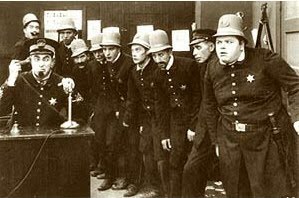
There's been a lot of interest in the case of Steve Bierfeldt, a treasurer and development officer for a political group affiliated with the 2008 presidential candidate Ron Paul. Last week, the TSA backed down in this case after the ACLU filed suit.
Late last March, Bierfeldt was detained at TSA security at the St. Louis airport and given the heavy-handed third-degree by TSA screeners and two local cops. The reason: Bierfeldt -- returning home to Virginia from a campaign fundraiser -- had a box with $4,700 in cash packed (in plain sight) in his carry-on. (The cash was campaign donations and proceeds from the sale of t-shirts, books and other political material that Bierfeldt was routinely carrying as part of his job.)
Carrying a significant amount of cash is 1. Not illegal. 2. None of the screeners' official business, once they have determined that the cash is not hiding, say, a razor blade or other weapon. In fact, it's not even the business of a real police officer, unless that officer has determined that there is reasonable and probable cause to suspect a crime.
Bierfeldt politely declined to explain to the screeners why he had the cash, which was entirely within his legal rights. Because of this, he was marched off to a windowless interrogation room for a third-degree type interrogation session that lasted more than 20 minutes. But Bierfeldt had his iPhone with him. The interrogators were unaware that he was recording the entire ugly session.
The ACLU later sued the TSA on Bierfeldt's behalf. The suit was dropped last week after the TSA issued to screeners new guidelines that basically reminded them that their job is to protect air-travel safety by looking for weapons and explosives and verifying passengers' IDs.
Reading the transcript of the conversation, as recorded by Bierfeldt and later appended to court papers by the TSA, is the only way to get a full understanding of how out-of-line some screeners can get.
Via the ACLU Web site, here's a link to the .pdf that has the full transcript of the recording Bierfeldt made of the session. Note: At the top of the .pdf document is the affidavit by Ron Bardmass, the screener-supervisor who was Bierfeld's main questioner at the table -- where two other TSA officers and two local cops also were present. To see the actual minute-by-minute transcript, scroll down past Bardmass's affidavit to Attachment 1.
And here's a link to the audio recording Bierfeldt made.
###
Tuesday, November 17, 2009
American, United Flight Attendants in Informational Picketing Wednesday at LGA, LAX, ORD, DCA, SFO, BOS
You may see flight attendants picketing at several big airports tomorrow. It's not a job action, but rather what the flight attendants unions call a "mock strike." United Airlines flight attendants are showing support for American Airlines flight attendants over the usual issues: pay and benefit cuts, lousy working conditions, all those promises unkept.
Following is a statement this afternoon from the United flight attendants union:
***
Chicago – United Airlines flight attendant members of the Association of Flight Attendants-CWA, AFL-CIO (AFA-CWA) will join members of the Association of Professional Flight Attendants (APFA) at American Airlines on the picket line at airports around the country tomorrow. While American flight attendants conduct a mock strike and walk the picket line, United flight attendants will join them in solidarity for a fair contract and coordinated efforts to lift the standard for flight attendants across the industry.
"This may be a mock strike but the issues we share with our colleagues at American are all too real," said Greg Davidowitch, president of the AFA-CWA at United Airlines. "We are standing together for improvements in pay and working conditions. If management does not agree to new contracts, then the next strike won't be a mock strike."
Both United and American flight attendants shouldered deep concessions to help their airlines turn around during United’s bankruptcy and American’s efforts to avoid Chapter 11. Flight attendants have suffered the effects of huge cuts to pay, benefits and retirement while working longer hours away from their families for nearly a decade. Now the flight attendant union members are standing together to rebuild their career by negotiating fair contracts at each airline with improvements in pay, health care, retirement and quality of work life.
AFA-CWA flight attendants will join the picket line tomorrow, November 18th, in locations where United and American both have flight attendant bases. These locations are: Boston Logan International Airport from 11:00 am – 2:00 pm local time; Chicago O’Hare from 10:00 am – 3:00 pm local time; Los Angeles International Airport from 11:00 am – 2:00 pm local time; New York LaGuardia Airport from 11:00 am – 2:00 pm local time; San Francisco International Airport from 7:00 am – 2:00 pm local time; and Washington National Airport from 11:00 am – 2:00 pm local time."
###
Following is a statement this afternoon from the United flight attendants union:
***
Chicago – United Airlines flight attendant members of the Association of Flight Attendants-CWA, AFL-CIO (AFA-CWA) will join members of the Association of Professional Flight Attendants (APFA) at American Airlines on the picket line at airports around the country tomorrow. While American flight attendants conduct a mock strike and walk the picket line, United flight attendants will join them in solidarity for a fair contract and coordinated efforts to lift the standard for flight attendants across the industry.
"This may be a mock strike but the issues we share with our colleagues at American are all too real," said Greg Davidowitch, president of the AFA-CWA at United Airlines. "We are standing together for improvements in pay and working conditions. If management does not agree to new contracts, then the next strike won't be a mock strike."
Both United and American flight attendants shouldered deep concessions to help their airlines turn around during United’s bankruptcy and American’s efforts to avoid Chapter 11. Flight attendants have suffered the effects of huge cuts to pay, benefits and retirement while working longer hours away from their families for nearly a decade. Now the flight attendant union members are standing together to rebuild their career by negotiating fair contracts at each airline with improvements in pay, health care, retirement and quality of work life.
AFA-CWA flight attendants will join the picket line tomorrow, November 18th, in locations where United and American both have flight attendant bases. These locations are: Boston Logan International Airport from 11:00 am – 2:00 pm local time; Chicago O’Hare from 10:00 am – 3:00 pm local time; Los Angeles International Airport from 11:00 am – 2:00 pm local time; New York LaGuardia Airport from 11:00 am – 2:00 pm local time; San Francisco International Airport from 7:00 am – 2:00 pm local time; and Washington National Airport from 11:00 am – 2:00 pm local time."
###
Edging Closer, United, Continental in Reciprocal Agreement on Elite-Status Upgrades
I'll leave it to you to read the tea leaves on this latest bit of kissy-face between United and Continental, which arrives this afternoon over the electronic transom:
"United Airlines and Continental Airlines today announced that members of each carrier’s frequent flier program who have earned elite status will receive unlimited, complimentary domestic upgrades on flights operated by both airlines when space is available.
"Continental’s elite-level frequent flyers also will have complimentary access to United’s Economy Plus seating, offering additional legroom near the front of the Economy cabin. United’s elite-level frequent flyers will have complimentary access to Continental’s Premium Seating as well.
"These new benefits will begin to roll out in mid-2010.
"Unlimited domestic upgrades and preferred economy class seating for elite-level frequent flier members are the latest additions to the suite of benefits available to United and Continental customers since the two carriers announced a wide-ranging global partnership in June 2008 and since Continental joined the Star Alliance Oct. 27 – benefits that include new access to dozens of cities around the world, recognition of elite status, and the ability to accrue and redeem miles on each other’s flights."
###
"United Airlines and Continental Airlines today announced that members of each carrier’s frequent flier program who have earned elite status will receive unlimited, complimentary domestic upgrades on flights operated by both airlines when space is available.
"Continental’s elite-level frequent flyers also will have complimentary access to United’s Economy Plus seating, offering additional legroom near the front of the Economy cabin. United’s elite-level frequent flyers will have complimentary access to Continental’s Premium Seating as well.
"These new benefits will begin to roll out in mid-2010.
"Unlimited domestic upgrades and preferred economy class seating for elite-level frequent flier members are the latest additions to the suite of benefits available to United and Continental customers since the two carriers announced a wide-ranging global partnership in June 2008 and since Continental joined the Star Alliance Oct. 27 – benefits that include new access to dozens of cities around the world, recognition of elite status, and the ability to accrue and redeem miles on each other’s flights."
###
'SeatGuru' Picks 5 'Top' Airports ... Miami? Las Vegas? ... Really??
I take online ratings reviews with the usual big bolder of salt, but SeatGuru.com really is stretching my salt-tolerance today with an announcement of its choice for the five top airports "to be stuck at" if you experience flight delays over the holidays. (Oh, the old holiday flight delays twist, even though flight delays have been dropping for a year and holiday travel is widely expected to be well off from previous levels).
Are you ready for this? SeatGuru founder Matt Daimler says, "We've picked these airports because of their amenities and attractions designed to help travelers relax and be entertained and pampered during any unfortunate, extended layovers."
Its "Top Five" Airports:
San Francisco ("Really? Number One?"); Salt Lake City ("Hey, can I get a drink here?"); Portland; Las Vegas McCarran ("Really? Number Four?") and ... wait for it: Miami!
Yes, Miami. Seriously.
###
Are you ready for this? SeatGuru founder Matt Daimler says, "We've picked these airports because of their amenities and attractions designed to help travelers relax and be entertained and pampered during any unfortunate, extended layovers."
Its "Top Five" Airports:
San Francisco ("Really? Number One?"); Salt Lake City ("Hey, can I get a drink here?"); Portland; Las Vegas McCarran ("Really? Number Four?") and ... wait for it: Miami!
Yes, Miami. Seriously.
###
International Premium Traffic Plunges Again; U.S. Premium Traffic Also Off Sharply
The very big bet that airlines made on robust or at least resilient premium traffic on international routes is looking worse and worse. There's a word to describe the state of all of those fancy first-class and especially business-class seats over the oceans: Glut.
Continuing a year-long trend, premium traffic on international flights fell again in September -- by 13.9 percent -- over September 2008, the International Air Transport Association said today. Mostly reflecting steep discounts airlines have been forced to make in their front cabins, revenues declined 27 percent from September 2008.
North American airlines (U.S. airlines plus Canadian) reported a 10.7 percent drop in premium international traffic. If you discount the 26.9 percent drop in premium on the shorter-haul and relatively insignificent "within Europe" market, North American airlines accounted for most of the weakness.
Economy travel actually improved in the "within Europe" short- and medium-haul market, indicating that European business travelers who once flew business-class or first have switched to coach.
But a 14.5 percent decline in premium-class demand across the Atlantic likely reflects "weaker developments in the U.S. and UK economies" that caused a net decline in transatlantic business travel in any class, IATA said.
In the domestic U.S. market, business travelers hoping to score upgrades might take heart from the 20.4 percent decline in domestic U.S. premium-class demand within North America.
On the other hand, domestic airlines continue to slash capacity and reduce schedules, keeping planes full.
And, of course, with all of those double-miles-per-trips promotions on elite-status qualifying miles this year, there are going to be a lot more high-status fliers lined up for those upgrades.
Next year, platinum will be the new gold; gold will be the new silver. And silver? Good luck!
###
Continuing a year-long trend, premium traffic on international flights fell again in September -- by 13.9 percent -- over September 2008, the International Air Transport Association said today. Mostly reflecting steep discounts airlines have been forced to make in their front cabins, revenues declined 27 percent from September 2008.
North American airlines (U.S. airlines plus Canadian) reported a 10.7 percent drop in premium international traffic. If you discount the 26.9 percent drop in premium on the shorter-haul and relatively insignificent "within Europe" market, North American airlines accounted for most of the weakness.
Economy travel actually improved in the "within Europe" short- and medium-haul market, indicating that European business travelers who once flew business-class or first have switched to coach.
But a 14.5 percent decline in premium-class demand across the Atlantic likely reflects "weaker developments in the U.S. and UK economies" that caused a net decline in transatlantic business travel in any class, IATA said.
In the domestic U.S. market, business travelers hoping to score upgrades might take heart from the 20.4 percent decline in domestic U.S. premium-class demand within North America.
On the other hand, domestic airlines continue to slash capacity and reduce schedules, keeping planes full.
And, of course, with all of those double-miles-per-trips promotions on elite-status qualifying miles this year, there are going to be a lot more high-status fliers lined up for those upgrades.
Next year, platinum will be the new gold; gold will be the new silver. And silver? Good luck!
###
Monday, November 16, 2009
Bus Fare?
[Updated with reference to Bolt Bus.]
LimoLiner, which goes to great lengths to avoid using the word "bus" in its promos, announced a new one-way fare of $69 between New York and Boston, for travel after Nov. 22.
How much? The e-mail announcement annoyed me by sending me to the company Web site to "learn more" -- like, how much does it really cost, and what is this "limited availability" they mention.
Online, the fare I got was not $69 one way, but $80, for travel on Nov. 24 -- and I'm not sure that was the real price, either, because the Web site then demanded that I fill in personal information and choose a user name and password, yada, yada yada, before I could learn more. Hey, that's way more work than I am inclined to do just to find out the bus fare.
The Delta or US Air shuttles get you there faster (just over an hour versus just over 4 hours), but of course you have to contend with airports. Still, it took a few seconds to find round-trip shuttle fares in the $240 range on both Delta and US Airways -- without getting jerked around by demands that I fill in personal information.
[UPDATE: How could I overlook Amtrak (that's a whole other story) but especially Bolt Bus, some people have asked me? Bolt is making real inroads in intercity transport, offering legroom, WiFi and electrical power outlets. Its departures/destinations include New York, Boston, Philly and Cherry Hill, Baltimore, and Washington. With no online hassle at all, I found a $39.50 round-trip fare between New York and Boston. Here's the Bolt Web site.]
I'd be more favorably disposed to LimoLiner if they'd make it as easy to get the price and restrictions as the airlines do. But still, that 4+ hour drive is a real factor for business travel, any way you cut it. What is a fairly do-able day trip on the airline shuttles is more likely an overnighter by bus, though the service is obviously geared to that.
LimoLiner says that the $69 one-way fare applies to "many off-peak seats" on its frequent daily departures. The company adds, "It also means passengers may obtain the lowest fare right up to departure time, unlike other fares that require advance purchase. LimoLiner will continue to offer its standard $89 fare for all peak travel time trips and $79 for many other trips. The new fares will replace all of the current fare structure."
Can I get an English translation here?
LimoLiner offers free wireless Internet en route, plus food and beverage service, live satellite TV and radio, first-run movies. The LimoLiner luxury bus, I mean "vehicle" holds 28 passengers.
###
LimoLiner, which goes to great lengths to avoid using the word "bus" in its promos, announced a new one-way fare of $69 between New York and Boston, for travel after Nov. 22.
How much? The e-mail announcement annoyed me by sending me to the company Web site to "learn more" -- like, how much does it really cost, and what is this "limited availability" they mention.
Online, the fare I got was not $69 one way, but $80, for travel on Nov. 24 -- and I'm not sure that was the real price, either, because the Web site then demanded that I fill in personal information and choose a user name and password, yada, yada yada, before I could learn more. Hey, that's way more work than I am inclined to do just to find out the bus fare.
The Delta or US Air shuttles get you there faster (just over an hour versus just over 4 hours), but of course you have to contend with airports. Still, it took a few seconds to find round-trip shuttle fares in the $240 range on both Delta and US Airways -- without getting jerked around by demands that I fill in personal information.
[UPDATE: How could I overlook Amtrak (that's a whole other story) but especially Bolt Bus, some people have asked me? Bolt is making real inroads in intercity transport, offering legroom, WiFi and electrical power outlets. Its departures/destinations include New York, Boston, Philly and Cherry Hill, Baltimore, and Washington. With no online hassle at all, I found a $39.50 round-trip fare between New York and Boston. Here's the Bolt Web site.]
I'd be more favorably disposed to LimoLiner if they'd make it as easy to get the price and restrictions as the airlines do. But still, that 4+ hour drive is a real factor for business travel, any way you cut it. What is a fairly do-able day trip on the airline shuttles is more likely an overnighter by bus, though the service is obviously geared to that.
LimoLiner says that the $69 one-way fare applies to "many off-peak seats" on its frequent daily departures. The company adds, "It also means passengers may obtain the lowest fare right up to departure time, unlike other fares that require advance purchase. LimoLiner will continue to offer its standard $89 fare for all peak travel time trips and $79 for many other trips. The new fares will replace all of the current fare structure."
Can I get an English translation here?
LimoLiner offers free wireless Internet en route, plus food and beverage service, live satellite TV and radio, first-run movies. The LimoLiner luxury bus, I mean "vehicle" holds 28 passengers.
###
Friday, November 13, 2009
Via 'Wired,' a Very Cool Video Simulation of Sullenberger's Glide Into the Hudson

Wired.com has a very cool 3-D simulation of the amazing flight that landed in the Hudson River last January after losing both engines shortly after takeoff from La Guardia.
It's by Kas Osberbuhr, an engineer at K3 Resources who spent over 200 hours on the simulation, which is synched with the actual cockpit-ATC recordings and the cockpit voice recording. Amazing stuff.
It's worth watching as two new books appear on the subject. One, Chesley B. Sullenberger, the pilot (and former military glider pilot) who safely brought the plane down in the river and saved all 155 lives on board, is "Highest Duty," part dramatic report on the event, part memoir, and part cri de coeur about the sad current state of commercial aviation.
The other is "Fly by Wire: The Geese, the Glide and the 'Miracle' on the Hudson," by William Langewiesche. Though the book -- which was rushed into print -- got good reviews, Langewiesche took the opportunity to basically piss on Sullenberger's accomplishment by arguing Airbus's renowned "fly by wire" technology was the real hero, in that it "cradled them all the way to the water." Some passengers on Flight 1549 are, of course, unhappy. Yes, the Airbus plane had great technology. It also had a pilot with steely nerves, extensive training in gliders and exceptional command of a situation.
So, by the way, this is not the first time around for Langewiesche on hero-debunking. His book "American Ground," which focused on the firefighters and other workers at the hellish World Trade Center site in the aftermath of 9/11, accused firefighters of "shadowy, widespread" looting of the ruins of retail shops on the site. Relatives of dead firemen, and New York Fire Department officials, including some at the scene, said that Langewiesche never bothered to check with them about the charges, or to do basic fact-checking.
Here's a piece by David Carr in the New York Times in 2003 that reports on that controversy over Langewiesche's reporting standards. In it, Langewiesche is accused by a reporter who painstakingly investigated his description of firefighters looting a jeans store of "a reckless disregard for elementary procedures of verification."
Here's an even stronger condemnation of Langewiesche's credibility on the WTC Living History blog.
Earlier this year, furthermore, Langewiesche wrote a long and highly praised article in Vanity Fair magazine about the Oct. 29, 2006, mid-air collision over the Amazon, in which 154 in a Brazilian 737 died while seven in the American business jet that collided with the 737 at 37,000 feet lived, after a harrowing 25-minute ordeal.
In some detail, Langewiesche dramatically recreated the scene on the business jet after the crash, as its occupants contemplated imminent death, before its pilots unexpectedly found a military landing strip to put down in the jungle. He even put words in my mouth on the plane and ascribed motives to me, the only one of the survivors who has been free to talk about the crash.
Did he contact me for comment on these remarkable insights? Nope. Never even made an attempt, as I pointed out in a letter published subsequently in Vanity Fair. Hell, I have talked openly about that event since Day One. Nor did he try to talk to the other survivors.
Narrative license to create a "tangible narrative," he has airily called this don't-check-the-facts-out technique. For about 100 years, journalists have called that something else: "piping" your story -- and it while it's often an expression of amazement, it's never an expression of admiration.
###
Thursday, November 12, 2009
British Airways and Iberia to Merge
British Airways said that it and Iberia have agreed on a proposed merger that would create a "new, leading European airline group" incorporated in Madrid, but with operational and financial headquarters in London. British Airways will have majority control (at 55 percent) of the new group.
Depending on how you count the dough and the stock, the deal is valued at up to $7 billion.
The new airline group would have 419 aircraft and fly to 205 destinations.
British Airways said that the new corporate group "will combine the two companies’ leading positions in the UK and Spain and enhance their strong presence in the international long-haul markets, while retaining the individual brands and current operations of each airline."
Both airlines retain membership in the oneworld Alliance.
The holding group's name is TopCo. British Airways' Willie Walsh will be the group CEO. Iberia's Antonio Vázquez will be group chairman and Martin Broughton will be deputy group chairman.
Here's an analysis in the Guardian that addresses the proposed quasi-merger between American Airlines and British Airways.
Here's the London Times main story on today's merger announcement.
###
Depending on how you count the dough and the stock, the deal is valued at up to $7 billion.
The new airline group would have 419 aircraft and fly to 205 destinations.
British Airways said that the new corporate group "will combine the two companies’ leading positions in the UK and Spain and enhance their strong presence in the international long-haul markets, while retaining the individual brands and current operations of each airline."
Both airlines retain membership in the oneworld Alliance.
The holding group's name is TopCo. British Airways' Willie Walsh will be the group CEO. Iberia's Antonio Vázquez will be group chairman and Martin Broughton will be deputy group chairman.
Here's an analysis in the Guardian that addresses the proposed quasi-merger between American Airlines and British Airways.
Here's the London Times main story on today's merger announcement.
###
Tuesday, November 10, 2009
'Thish Ish Your Captain (**burp**) Shpeaking'
A United Airlines pilot was hauled off a flight and arrested on suspicion of being drunk minutes before takeoff at London Heathrow Airport on a flight to San Francisco Monday.
Here's the story.
###
Here's the story.
###
Monday, November 09, 2009
London Times on Libel Tourism: 'Britain Is a Pariah State ... Exploited By the Unsavory'
The Times of London has been running a hard-hitting series on the threat to free speech caused by libel tourism, in which a foreign plaintiff goes to a foreign court to sue a U.S. citizen on libel allegations that would never stand up in a U.S. court.
I've been sued in Brazil, for example, on the ridiculous charge that I insulted the "dignity" of that country by my reporting and commentary, mostly on a blog written in the U.S. for an American readership, after the 2006 mid-air collision over the Amazon that I was one of seven survivors of. (154 others died).
The Brazil suit is an obvious attempt to intimidate and seek to punish me, and to warn others. I think it's also meant to inflame domestic emotions again in Brazil during the ongoing criminal trial, on trumped-up charges, of the two American pilots of the business jet, Joe Lepore and Jan Paladino.
But Brazil aside, the major crush of the libel tourism outrages, so far, has been in Britain. And some people in the U.S., including major media, are pushing back.
This blast against Britain's odious libel courts is in tomorrow's Times of London.
###
I've been sued in Brazil, for example, on the ridiculous charge that I insulted the "dignity" of that country by my reporting and commentary, mostly on a blog written in the U.S. for an American readership, after the 2006 mid-air collision over the Amazon that I was one of seven survivors of. (154 others died).
The Brazil suit is an obvious attempt to intimidate and seek to punish me, and to warn others. I think it's also meant to inflame domestic emotions again in Brazil during the ongoing criminal trial, on trumped-up charges, of the two American pilots of the business jet, Joe Lepore and Jan Paladino.
But Brazil aside, the major crush of the libel tourism outrages, so far, has been in Britain. And some people in the U.S., including major media, are pushing back.
This blast against Britain's odious libel courts is in tomorrow's Times of London.
###
Drop in Thanksgiving Air Travel Seen
Four percent fewer passengers will board U.S. airlines over this year's Thanksgiving holiday compared with last year, the Air Transport Association says.
But don't expect planes to be less full. As noted here yesterday, airline capacity -- the number of seats available -- dropped by 5.1 percent in the three months ended in September.
Still, it's very unusual to be walking up to a big travel holiday and reporting a downward travel trend like this one.
"It is increasingly apparent that the economic head-winds facing the airlines and their customers are anything but behind us. The recent announcement that U.S. unemployment surpassed 10 percent highlights one of the key factors impacting consumer buying decisions," James C. May, the ATA president and CEO, said in a statement.
The airline trade group said, "As typical with the Thanksgiving holiday travel period, flights are likely to be quite full, driven this year by the decrease in available seats and deep discounting, rather than by robust demand. Carriers have cut back their schedules in response to economic pressures, with 2009 capacity reductions the deepest since 1942."
###
But don't expect planes to be less full. As noted here yesterday, airline capacity -- the number of seats available -- dropped by 5.1 percent in the three months ended in September.
Still, it's very unusual to be walking up to a big travel holiday and reporting a downward travel trend like this one.
"It is increasingly apparent that the economic head-winds facing the airlines and their customers are anything but behind us. The recent announcement that U.S. unemployment surpassed 10 percent highlights one of the key factors impacting consumer buying decisions," James C. May, the ATA president and CEO, said in a statement.
The airline trade group said, "As typical with the Thanksgiving holiday travel period, flights are likely to be quite full, driven this year by the decrease in available seats and deep discounting, rather than by robust demand. Carriers have cut back their schedules in response to economic pressures, with 2009 capacity reductions the deepest since 1942."
###
Sunday, November 08, 2009
Fares Rising as Capacity Cuts Keeps Planes Full

Checked any fares recently? I just went to book a trip to Tucson and the best fare I could find was about $150 more than it would have been a month ago.
Airlines are entering the winter season with a little more confidence that they will have regained some pricing power and may be able to hold onto it. Most airline operating results for October showed load factors -- the number of available seats filled with paying customers -- in the 83-84 percent rage. Load factors like that mean that virtually every in-demand flight is taking off with every seat full.
Even the third-quarter financials, reflecting a dismal summer of passenger demand, were better than had been anticipated, though revenue remains way down. Among the nine largest airlines, third-quarter operating revenue was down $28.3 billion, an 18 percent decline over the third quarter of 2008. Still, the total was $223 million higher than AirlineFinancials.com had estimated, said Robert Herbst, an airline pilot who publishes the financial analytical site.
Total capacity, he reports, was down 5.1 percent over the 3rd quarter of 2008 -- reflecting an accelleration of the capacity slashing that began in 2000, gained speed in recent years -- and now leaves us with a domestic airline system that has 20.1 percent fewer seats than it did nine years ago, according to OAG.
Herbst expects that year-on-year revenue growth could begin as early as the 2010 first quarter. Looking at current domestic coach fares and shrunken schedules, and knowing that business travel is starting to pick up again, I'd say that is a pretty good guess.
###
Saturday, November 07, 2009
A Crusade (Oops, That Word) Against Libel Tourism -- And Why Americans Who Value Free Speech Should Saddle Up
"Libel tourism" is the label used to describe libel lawsuits filed in a foreign country, by a foreign plaintiff, against Americans for writings or speech in the United States that are fully protected under the U.S. Constitution.
The mainstream media in the U.S. have been reluctant to examine the phenomenon much -- not, I suspect, out of any genuinely held convictions (God forbid) but rather because it's complicated, messy and off-narrative. Shield laws protecting card-carrying journalists' important rights to protect sources, that's the official narrative.
Shield laws are important. Libel tourism, on the other hand, is the most egregious threat ever to free speech in this country. Maybe because it affects all of us, not just establishment journalists, it's off the domestic media radar-screen.
It certainly affects bloggers.
In libel tourism cases (disclosure: I am currently being sued for libel in Brazil is one such case), someone in another country who doesn't like something written or said in the United States conveniently finds a friendly foreign court to handle their grievance. Said foreign court -- Britain is the best example of pliant courts for libel-tourism -- harrumphs and snorts and finds in favor of the plaintiff against an American exercising his or her right to free speech in the United States.
Viola! A foreign court and a foreign plaintiff have neatly done what no nefarious force within the United States has ever done -- brazenly reached into the U.S. in violation of the First Amendment to the United States Constitution. American defendants are duly served at their homes in the U.S. by American law firms working on behalf of the foreign plaintiff, judgment is ultimately rendered, and legal proceedings are then launched to enforce a foreign court judgment in the United States. The American defendant is then left to fend for himself or herself.
So far, foreign monetary judgments in libel-tourism cases have not been enforced, but there is no absolute guarantee that they won't be, as foreign governments dicker with U.S. state and federal legal systems and look for ways, like trade agreement laws, to sneak under the tent.
But now, at the very least, a foreign judgment against an American citizen in a libel tourism case creates financial burdens. It also limits the ability of that citizen to travel internationally to the place where the judgment has been rendered -- in most cases Britain, so far. For example, Rachel Ehrenfeld, an American who lost a libel-tourism case in the UK, and whose academic work often involves international travel, is unable to travel to Britain because of the judgment against her.
And in time, given shifting international treaties, protocol alliances, and the drive to apply so-called universal law, having such a judgment hanging over you could severely limit an American's ability to travel internationally in general.
The most prominent example of libel tourism is the case of Dr. Ehrenfeld, an author and academic expert on terrorism financing. She lost a libel suit filed against her in the UK by a wealthy Saudi tycoon, Khalid bin Mahfouz, who objected to a few brief mentions of himself as a financial backer of Al Qaeda in Ehrenfeld's 2003 book, "Funding Evil: How Terrorism Is Financed -- And How to Stop It."
In a suit that would have never been considered by a U.S. court, Mahfouz (who died in August) readily prevailed in the British High Court, ground zero for those seeking easy-as-pie libel verdicts.
Outrage over the Ehrfenfeld case prompted New York State to adopt a law in 2008 protecting residents of New York (which Ehrenfeld is) from enforcement of foreign libel judgments in cases where the alleged offense is "inconsistent" with the principles of American free speech.
Several other states, including Florida and California, have since adopted similar laws, and a federal law called the Free Speech Protection Act of 2009 is now pending in the Senate Judiciary Committee, after being introduced by Sen. Arlen Specter with Sens. Schumer, Lieberman and Wyden as co-sponsors. That bill, along with a similar one pending in the House, where it was introduced by Rep. Pete King, would make it impossible to enforce in the U.S. a foreign libel judgment that is inconsistent with the U.S. First Amendment.
I wish I could say that the bills are merrily rolling along to legislative reconciliation and thence to the President's desk, but that's not the case. Sen. Patrick Leahy, the chairman of the Judiciary Committee, has not yet shown sufficient interest in the matter to provide evidence that the bill will move forward any time soon.
And the State Department, notoriously timid about treading on the legal toes of friendly countries whose good offices might be necessary on unrelated delicate matters, has so far kept its distance or, worse, signaled its distaste for the lack of diplomatic comity that might ensue if the U.S. government were to tell, say, the British High Court to take a jolly good hike along with its spurious libel judgments.
Another prominent libel tourism case involves an American investigative reporter and academic named Paul Williams, who is being sued by McMaster University in Canada under Canadian libel laws for reporting he did on a terrorist cell. Like Dr. Ehrenfeld's, the Williams' case could not have been brought in a U.S. court.
Dr. Williams, who lives in Pennsylvania and published the alleged offenses in the United States, told me last were that he and his wife have personally spent about $100,000 so far in his defense against the Canadian action. In all, the Williams defense (the trial is forthcoming) has so far cost nearly $500,000, he said.
And then, of course, there is me.
In an action that still has lawyers shaking their heads in amazement, I am being sued in Brazil by a person who claims that my reporting and commentary following the horrific 2006 mid-air collision over the Amazon (in which 154 died) caused her to "feel discriminated against" as a citizen of Brazil. That's apparently because I forcefully challenged Brazilian authorities in their disgraceful rush to immediately criminalize the accident (against all protocols of international aviation), to cover up and fail to address the principal cause of the accident (operational and systemic errors in Brazilian air-traffic control over the Amazon), and to scapegoat the two American pilots who brought the surviving and badly damaged American business jet down in an emergency landing in the Amazon with me and four other passengers on board.
Besides the startling change in venue to a different continent, the major twist in the Brazil libel-tourism suit is that I had never heard of, let along said or wrote anything about, the plaintiff until she filed the suit. The complaint is based on the amazing legal notion that a citizen of Brazil can claim injury if she or he feels offended by anything written or spoken -- by anywhere in the world -- about that country. Even if, as in this case, the plaintiff was never mentioned or in any way referred to.
By the way, the examples of my alleged offense to the dignity of Brazil ("most idiot of idiots" is one alleged comment) cited in the complaint did not come from me. We've been able to trace the genesis of the allegedly actionable quotes back to comments made by others either in the Brazilian news media or on Brazilian blogs or onlilne comments that linked to the blog on Brazil that I started right after the accident and discontinued almost two years ago. Or in some cases, the allegations appear to have been created out of thin air.
But, as I said at a meeting last week with Judiciary Committee legal staffers and other prominent First Amendment experts, this is not about me. Nor is not about Rachel Ehrenfeld or Paul Williams.
It's about all of us.
If a foreign court can reach across U.S. borders to punish, intimidate or otherwise seek to silence Americans for speech that is fully protected under the First Amendment, we have effectively lost freedom of speech.
This doesn't just potentially affect book writers and journalists. It also affects academics, researchers, bloggers, policy makers, travel reviewers, medical authorities, scientists debunking charlatans, and casual users of social networks. It potentially affects anyone who might be flushed out within U.S. borders by a foreign court for the alleged offense of failing to genuflect to the sensitivities of some aggrieved foreign entity.
Somebody in Iran (or North Korea or Somalia or Switzerland for that matter) doesn't like what you wrote or said in the U.S.? Sue! So far, the U.S. government has rolled over and pretended not to notice the threat.
If you sense a crusade being launched here (Oh. My. God. I used that word, considered actionable in some parts of the world), you are correct.
Incidentally, here's the latest update on British libel tourism from the Times of London.
Oddly, the Times of London article neglects to mention the Ehrenfeld cass, the most prominent of the UK libel tourism examples. Oh, wait, hmmm. Rupert Murdoch's News Corp., which owns the Times of London among other worldwide media properties, is in negotiations with the Saudis to buy a chunk of a big Saudi media empire that currently carries News Corp.'s Fox News.
We're gonna need a scorecard.
###
The mainstream media in the U.S. have been reluctant to examine the phenomenon much -- not, I suspect, out of any genuinely held convictions (God forbid) but rather because it's complicated, messy and off-narrative. Shield laws protecting card-carrying journalists' important rights to protect sources, that's the official narrative.
Shield laws are important. Libel tourism, on the other hand, is the most egregious threat ever to free speech in this country. Maybe because it affects all of us, not just establishment journalists, it's off the domestic media radar-screen.
It certainly affects bloggers.
In libel tourism cases (disclosure: I am currently being sued for libel in Brazil is one such case), someone in another country who doesn't like something written or said in the United States conveniently finds a friendly foreign court to handle their grievance. Said foreign court -- Britain is the best example of pliant courts for libel-tourism -- harrumphs and snorts and finds in favor of the plaintiff against an American exercising his or her right to free speech in the United States.
Viola! A foreign court and a foreign plaintiff have neatly done what no nefarious force within the United States has ever done -- brazenly reached into the U.S. in violation of the First Amendment to the United States Constitution. American defendants are duly served at their homes in the U.S. by American law firms working on behalf of the foreign plaintiff, judgment is ultimately rendered, and legal proceedings are then launched to enforce a foreign court judgment in the United States. The American defendant is then left to fend for himself or herself.
So far, foreign monetary judgments in libel-tourism cases have not been enforced, but there is no absolute guarantee that they won't be, as foreign governments dicker with U.S. state and federal legal systems and look for ways, like trade agreement laws, to sneak under the tent.
But now, at the very least, a foreign judgment against an American citizen in a libel tourism case creates financial burdens. It also limits the ability of that citizen to travel internationally to the place where the judgment has been rendered -- in most cases Britain, so far. For example, Rachel Ehrenfeld, an American who lost a libel-tourism case in the UK, and whose academic work often involves international travel, is unable to travel to Britain because of the judgment against her.
And in time, given shifting international treaties, protocol alliances, and the drive to apply so-called universal law, having such a judgment hanging over you could severely limit an American's ability to travel internationally in general.
The most prominent example of libel tourism is the case of Dr. Ehrenfeld, an author and academic expert on terrorism financing. She lost a libel suit filed against her in the UK by a wealthy Saudi tycoon, Khalid bin Mahfouz, who objected to a few brief mentions of himself as a financial backer of Al Qaeda in Ehrenfeld's 2003 book, "Funding Evil: How Terrorism Is Financed -- And How to Stop It."
In a suit that would have never been considered by a U.S. court, Mahfouz (who died in August) readily prevailed in the British High Court, ground zero for those seeking easy-as-pie libel verdicts.
Outrage over the Ehrfenfeld case prompted New York State to adopt a law in 2008 protecting residents of New York (which Ehrenfeld is) from enforcement of foreign libel judgments in cases where the alleged offense is "inconsistent" with the principles of American free speech.
Several other states, including Florida and California, have since adopted similar laws, and a federal law called the Free Speech Protection Act of 2009 is now pending in the Senate Judiciary Committee, after being introduced by Sen. Arlen Specter with Sens. Schumer, Lieberman and Wyden as co-sponsors. That bill, along with a similar one pending in the House, where it was introduced by Rep. Pete King, would make it impossible to enforce in the U.S. a foreign libel judgment that is inconsistent with the U.S. First Amendment.
I wish I could say that the bills are merrily rolling along to legislative reconciliation and thence to the President's desk, but that's not the case. Sen. Patrick Leahy, the chairman of the Judiciary Committee, has not yet shown sufficient interest in the matter to provide evidence that the bill will move forward any time soon.
And the State Department, notoriously timid about treading on the legal toes of friendly countries whose good offices might be necessary on unrelated delicate matters, has so far kept its distance or, worse, signaled its distaste for the lack of diplomatic comity that might ensue if the U.S. government were to tell, say, the British High Court to take a jolly good hike along with its spurious libel judgments.
Another prominent libel tourism case involves an American investigative reporter and academic named Paul Williams, who is being sued by McMaster University in Canada under Canadian libel laws for reporting he did on a terrorist cell. Like Dr. Ehrenfeld's, the Williams' case could not have been brought in a U.S. court.
Dr. Williams, who lives in Pennsylvania and published the alleged offenses in the United States, told me last were that he and his wife have personally spent about $100,000 so far in his defense against the Canadian action. In all, the Williams defense (the trial is forthcoming) has so far cost nearly $500,000, he said.
And then, of course, there is me.
In an action that still has lawyers shaking their heads in amazement, I am being sued in Brazil by a person who claims that my reporting and commentary following the horrific 2006 mid-air collision over the Amazon (in which 154 died) caused her to "feel discriminated against" as a citizen of Brazil. That's apparently because I forcefully challenged Brazilian authorities in their disgraceful rush to immediately criminalize the accident (against all protocols of international aviation), to cover up and fail to address the principal cause of the accident (operational and systemic errors in Brazilian air-traffic control over the Amazon), and to scapegoat the two American pilots who brought the surviving and badly damaged American business jet down in an emergency landing in the Amazon with me and four other passengers on board.
Besides the startling change in venue to a different continent, the major twist in the Brazil libel-tourism suit is that I had never heard of, let along said or wrote anything about, the plaintiff until she filed the suit. The complaint is based on the amazing legal notion that a citizen of Brazil can claim injury if she or he feels offended by anything written or spoken -- by anywhere in the world -- about that country. Even if, as in this case, the plaintiff was never mentioned or in any way referred to.
By the way, the examples of my alleged offense to the dignity of Brazil ("most idiot of idiots" is one alleged comment) cited in the complaint did not come from me. We've been able to trace the genesis of the allegedly actionable quotes back to comments made by others either in the Brazilian news media or on Brazilian blogs or onlilne comments that linked to the blog on Brazil that I started right after the accident and discontinued almost two years ago. Or in some cases, the allegations appear to have been created out of thin air.
But, as I said at a meeting last week with Judiciary Committee legal staffers and other prominent First Amendment experts, this is not about me. Nor is not about Rachel Ehrenfeld or Paul Williams.
It's about all of us.
If a foreign court can reach across U.S. borders to punish, intimidate or otherwise seek to silence Americans for speech that is fully protected under the First Amendment, we have effectively lost freedom of speech.
This doesn't just potentially affect book writers and journalists. It also affects academics, researchers, bloggers, policy makers, travel reviewers, medical authorities, scientists debunking charlatans, and casual users of social networks. It potentially affects anyone who might be flushed out within U.S. borders by a foreign court for the alleged offense of failing to genuflect to the sensitivities of some aggrieved foreign entity.
Somebody in Iran (or North Korea or Somalia or Switzerland for that matter) doesn't like what you wrote or said in the U.S.? Sue! So far, the U.S. government has rolled over and pretended not to notice the threat.
If you sense a crusade being launched here (Oh. My. God. I used that word, considered actionable in some parts of the world), you are correct.
Incidentally, here's the latest update on British libel tourism from the Times of London.
Oddly, the Times of London article neglects to mention the Ehrenfeld cass, the most prominent of the UK libel tourism examples. Oh, wait, hmmm. Rupert Murdoch's News Corp., which owns the Times of London among other worldwide media properties, is in negotiations with the Saudis to buy a chunk of a big Saudi media empire that currently carries News Corp.'s Fox News.
We're gonna need a scorecard.
###
Friday, November 06, 2009
'Take Your Bag, Sir?' ... 'No, Thanks. Somebody Already Took It'
Dang, I took a week off and when I wasn't looking, a couple of grifters stole a thousand bags, maybe more, off luggage carousels at the amusingly named Phoenix Sky Harbor International Airport.
This wasn't your usual airport heist, in which baggage handlers or TSA screeners five-finger items from checked bags and then send the bereft bags merrily along. This was plain old walk-up-to-the-carousel-and-abscond-with-the-whole-bag thievery.
I've always wondered about bags on carousels, where anybody can walk off with them. It kind of gave me hope about the human condition that theft from airport carousels evidently was not a problem.
Till now.
The potential remedies -- tag-inspection cops creating long lines to get out of the baggage-claim areas -- are depressing to contemplate.
Anyway, Tripadvisor.com today sent out an informal survey of passengers' attitudes toward the security of their bags at the baggage claim areas. More than half of the 1,830 responses said they were always or often concerned; 31 percent said "rarely," and 11 percent said "never."
Meanwhile, as to the other baggage theft problem, the one behind the scenes, the last time I traveled, I wrote "Oxy" on a label and pasted it onto a prescription bottle and slipped it into an outside pocket on a checked bag. Did it as a test. Sure enough, the bag arrived missing the bottle. I hope the thief enjoyed those drug-store Tylenols.
My next test involves a knockoff "gold" Rolex watch that I bought for $5 at one of those vendors in Times Square. (Actually, a quite convincing piece of work for $5, till you look closely).
###
This wasn't your usual airport heist, in which baggage handlers or TSA screeners five-finger items from checked bags and then send the bereft bags merrily along. This was plain old walk-up-to-the-carousel-and-abscond-with-the-whole-bag thievery.
I've always wondered about bags on carousels, where anybody can walk off with them. It kind of gave me hope about the human condition that theft from airport carousels evidently was not a problem.
Till now.
The potential remedies -- tag-inspection cops creating long lines to get out of the baggage-claim areas -- are depressing to contemplate.
Anyway, Tripadvisor.com today sent out an informal survey of passengers' attitudes toward the security of their bags at the baggage claim areas. More than half of the 1,830 responses said they were always or often concerned; 31 percent said "rarely," and 11 percent said "never."
Meanwhile, as to the other baggage theft problem, the one behind the scenes, the last time I traveled, I wrote "Oxy" on a label and pasted it onto a prescription bottle and slipped it into an outside pocket on a checked bag. Did it as a test. Sure enough, the bag arrived missing the bottle. I hope the thief enjoyed those drug-store Tylenols.
My next test involves a knockoff "gold" Rolex watch that I bought for $5 at one of those vendors in Times Square. (Actually, a quite convincing piece of work for $5, till you look closely).
###
Subscribe to:
Posts (Atom)
